The canvas
One fixed witness over an untouched desert coast. Everything after is measured against this frame.
Year2026
Rooted here. Ready for anything.
2026. Basin, day one. Fixed camera, 2,500 m.
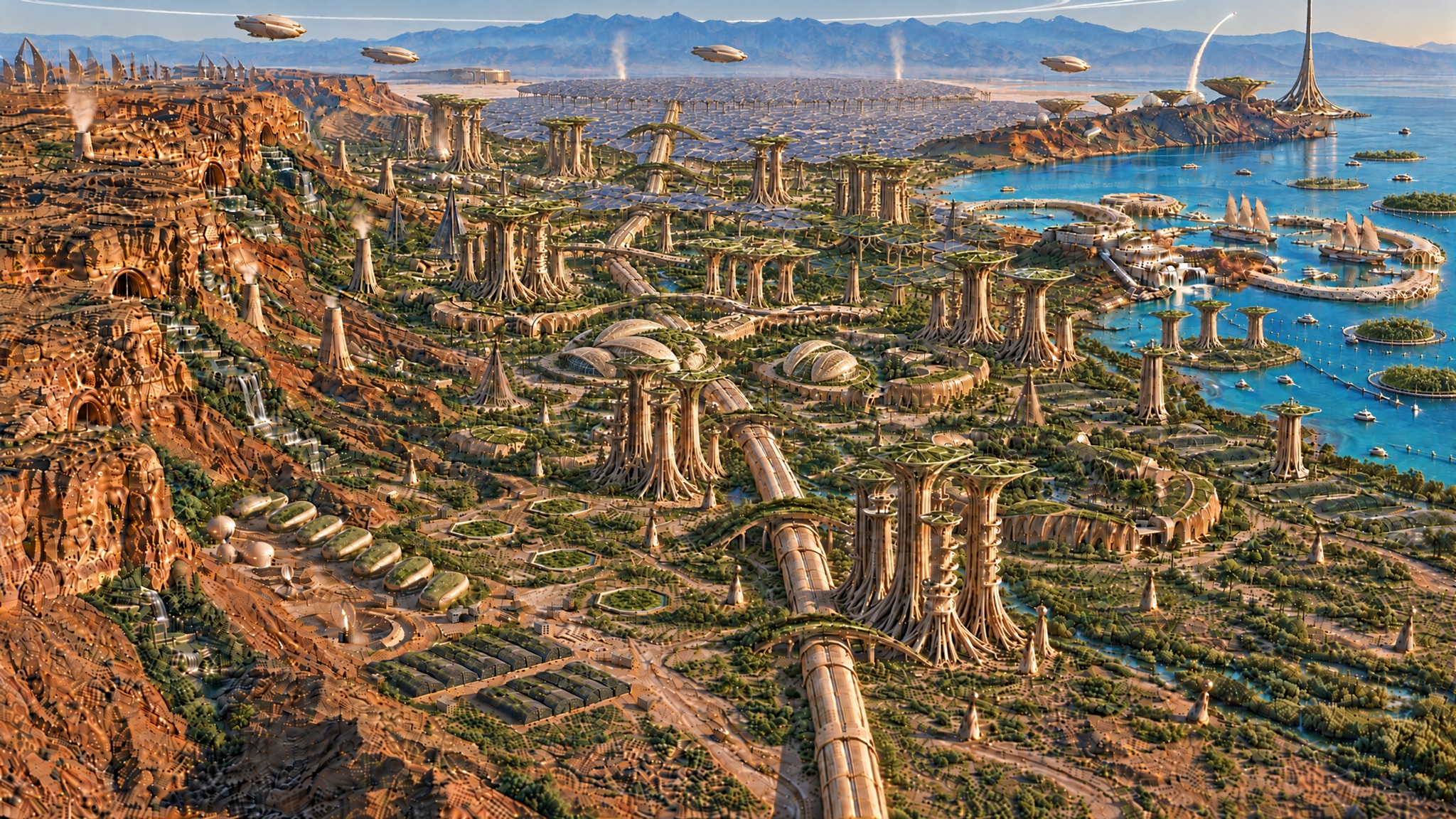
Move across the basin to look through to 2075
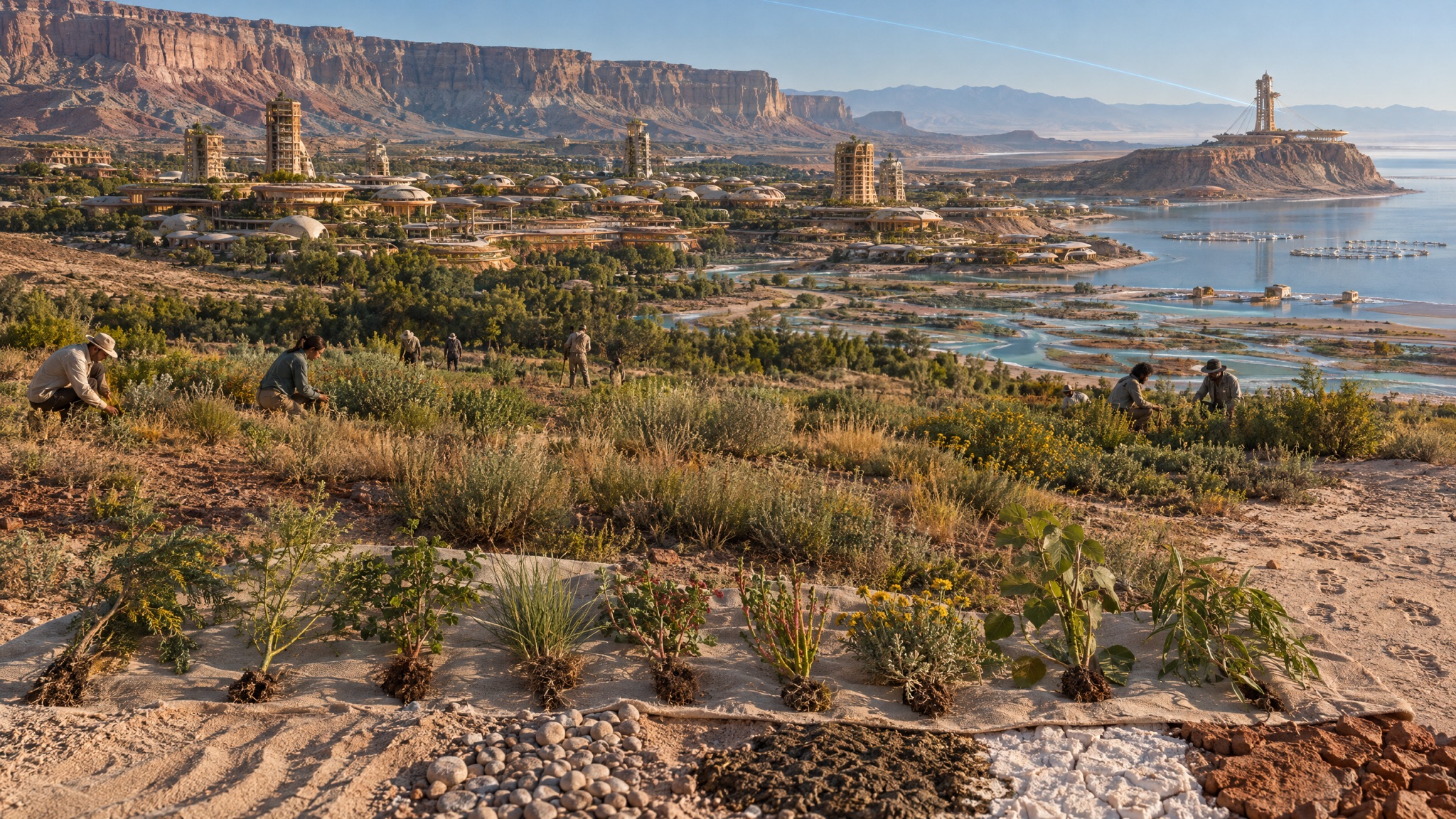
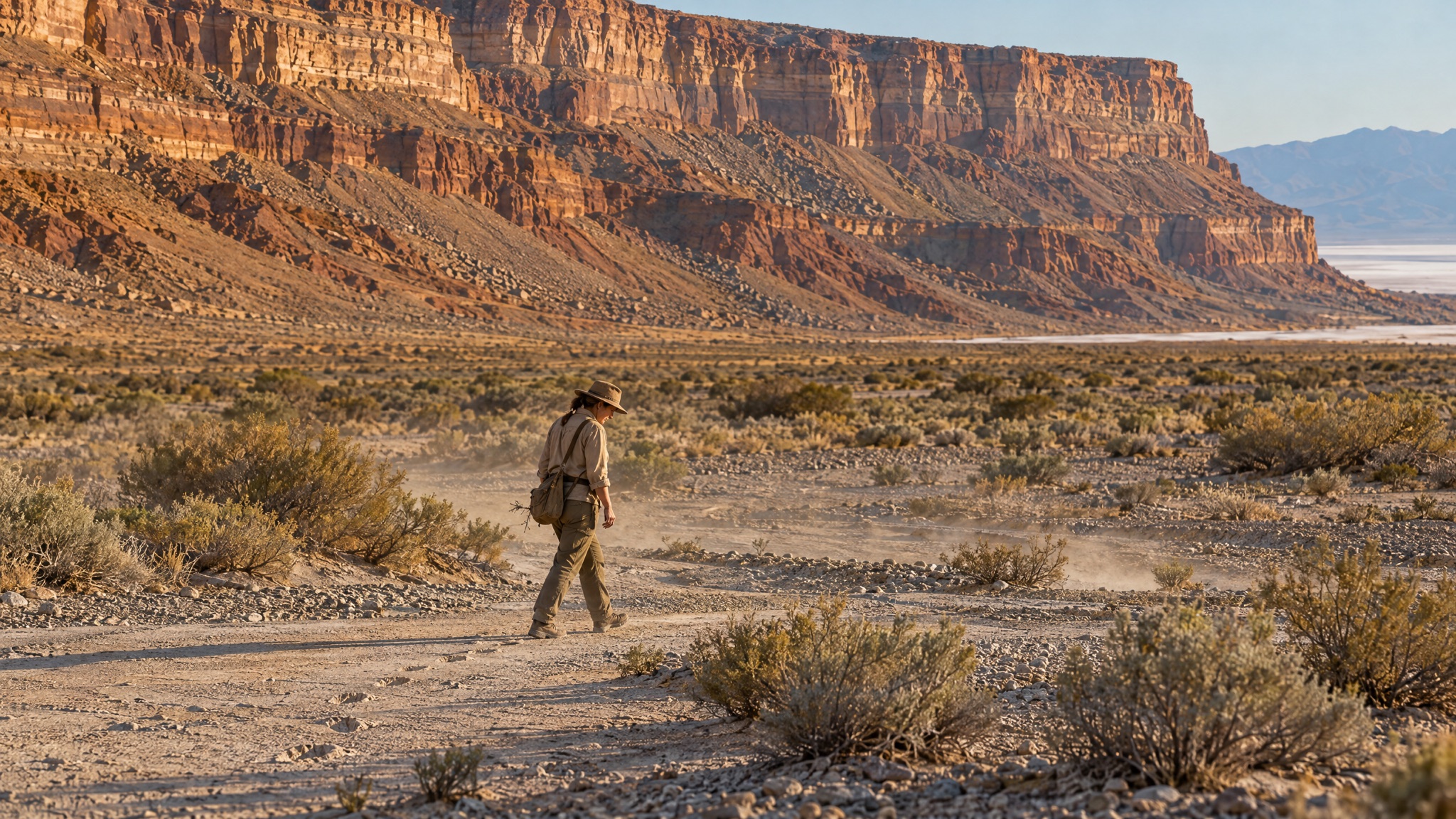
Most installations are dropped onto land and fight it for a century. TAPROOT begins the other way: a year of reading one coastal basin before anything is built. The washes are flagged and kept, the topsoil and plants are salvaged, and the first wall is printed from the ground it stands on.
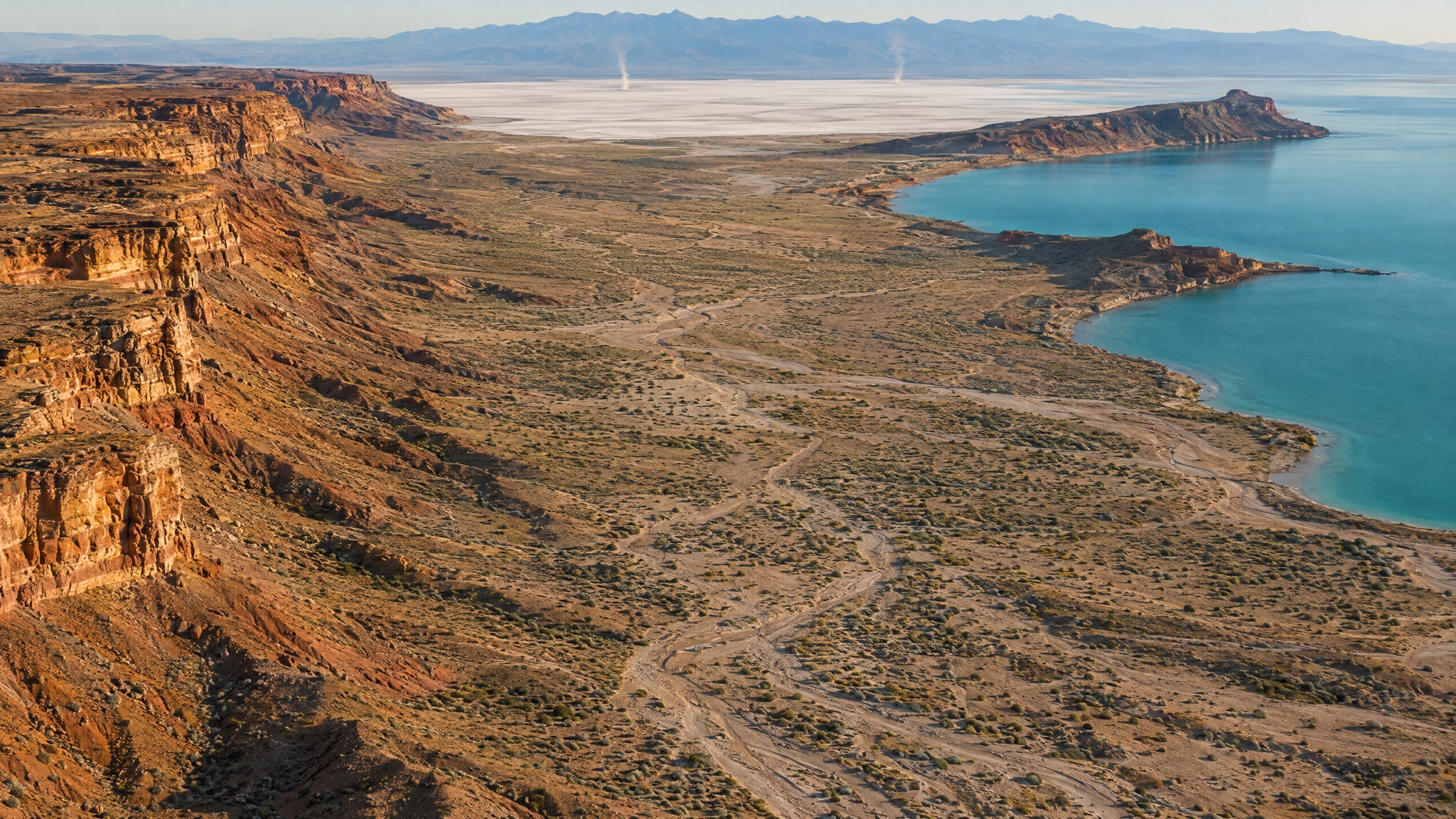
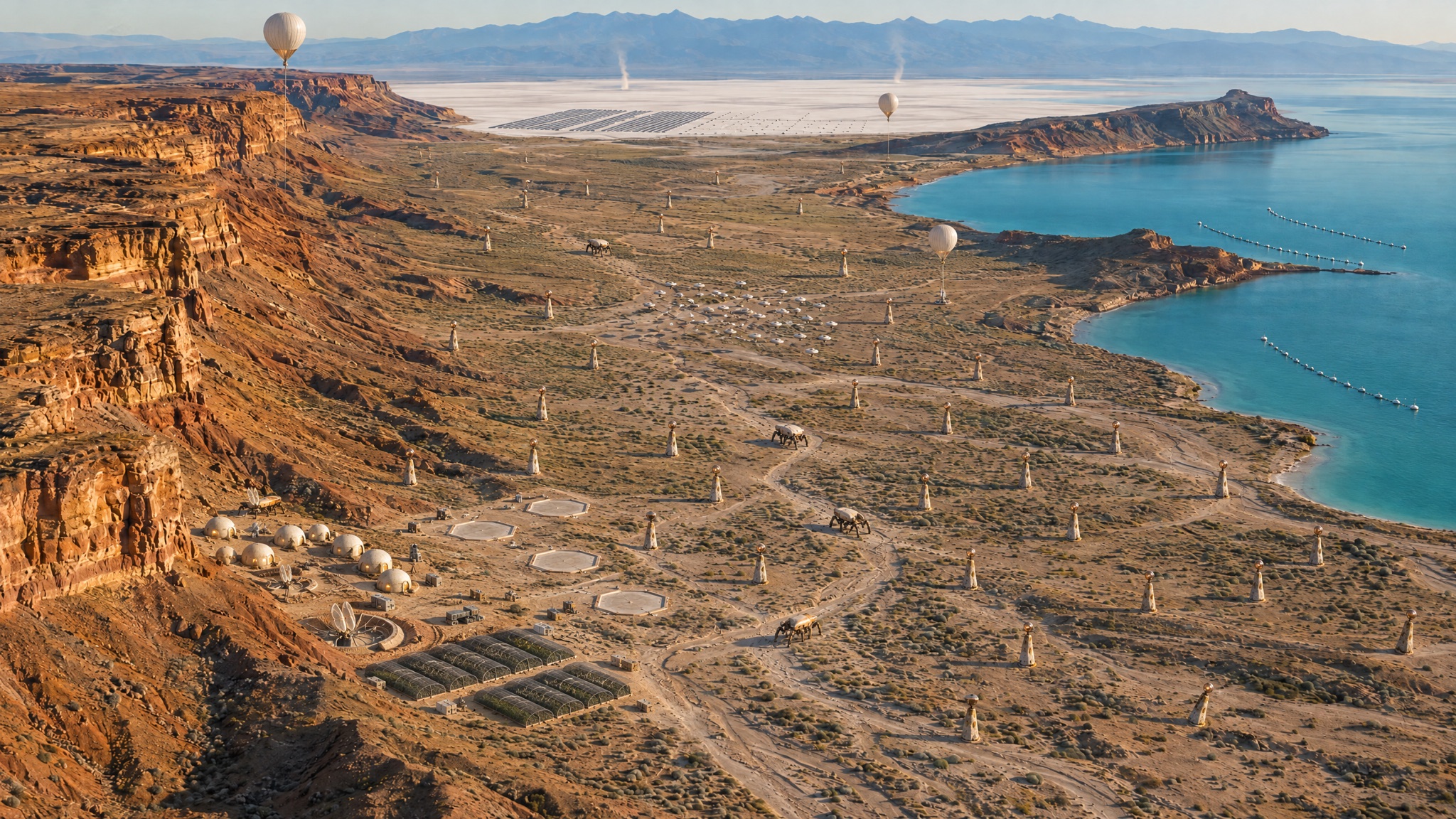
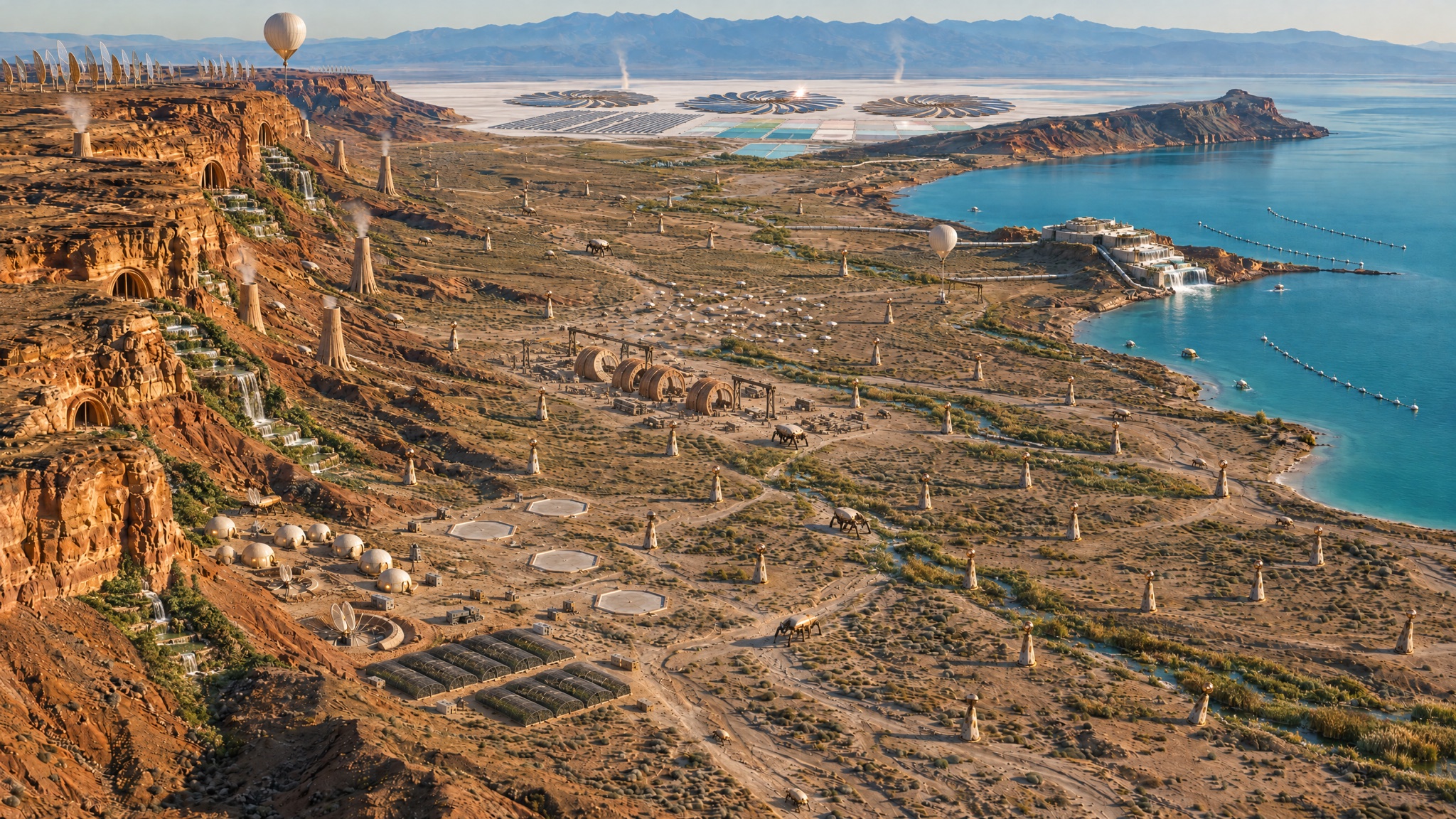
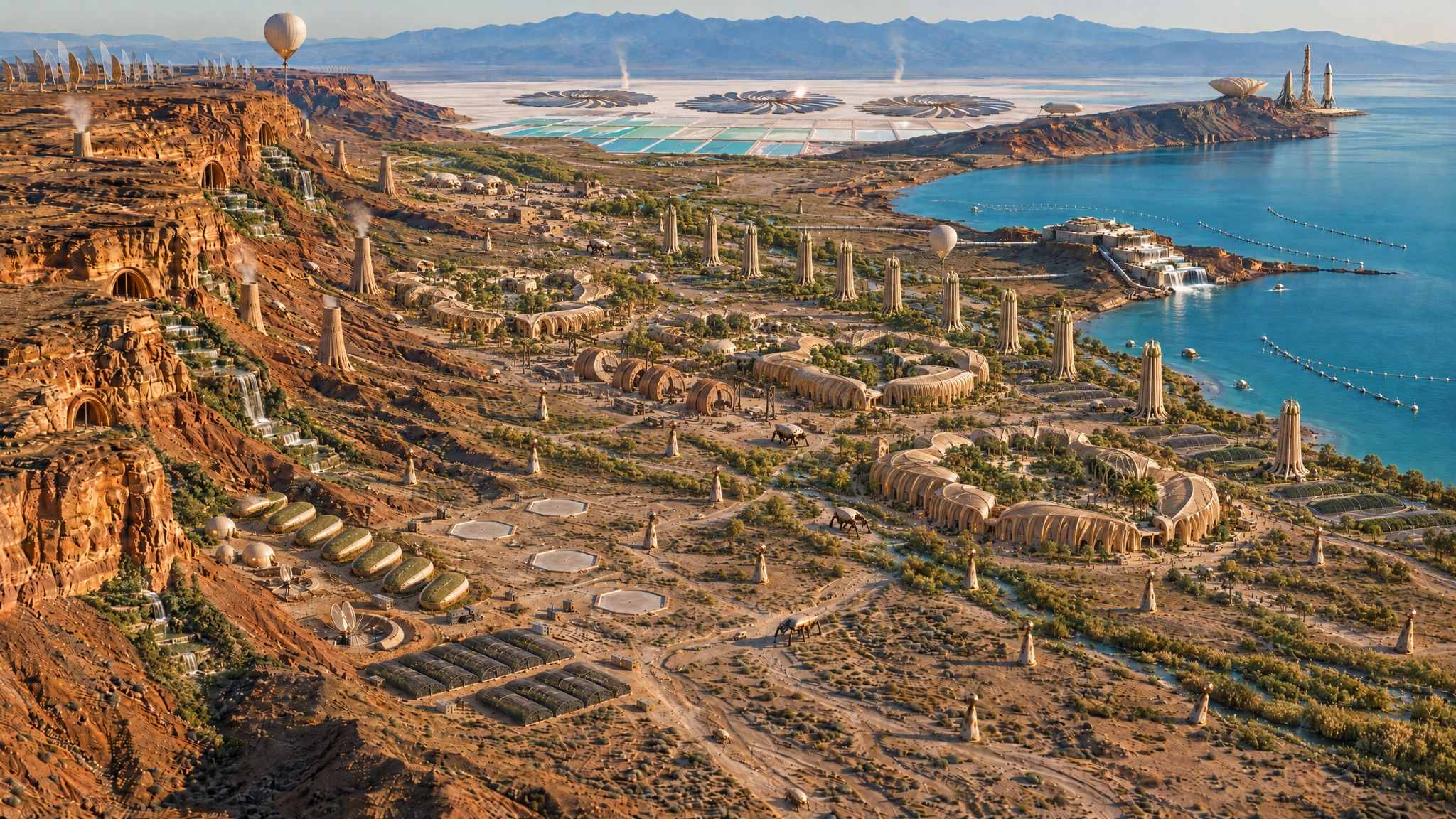
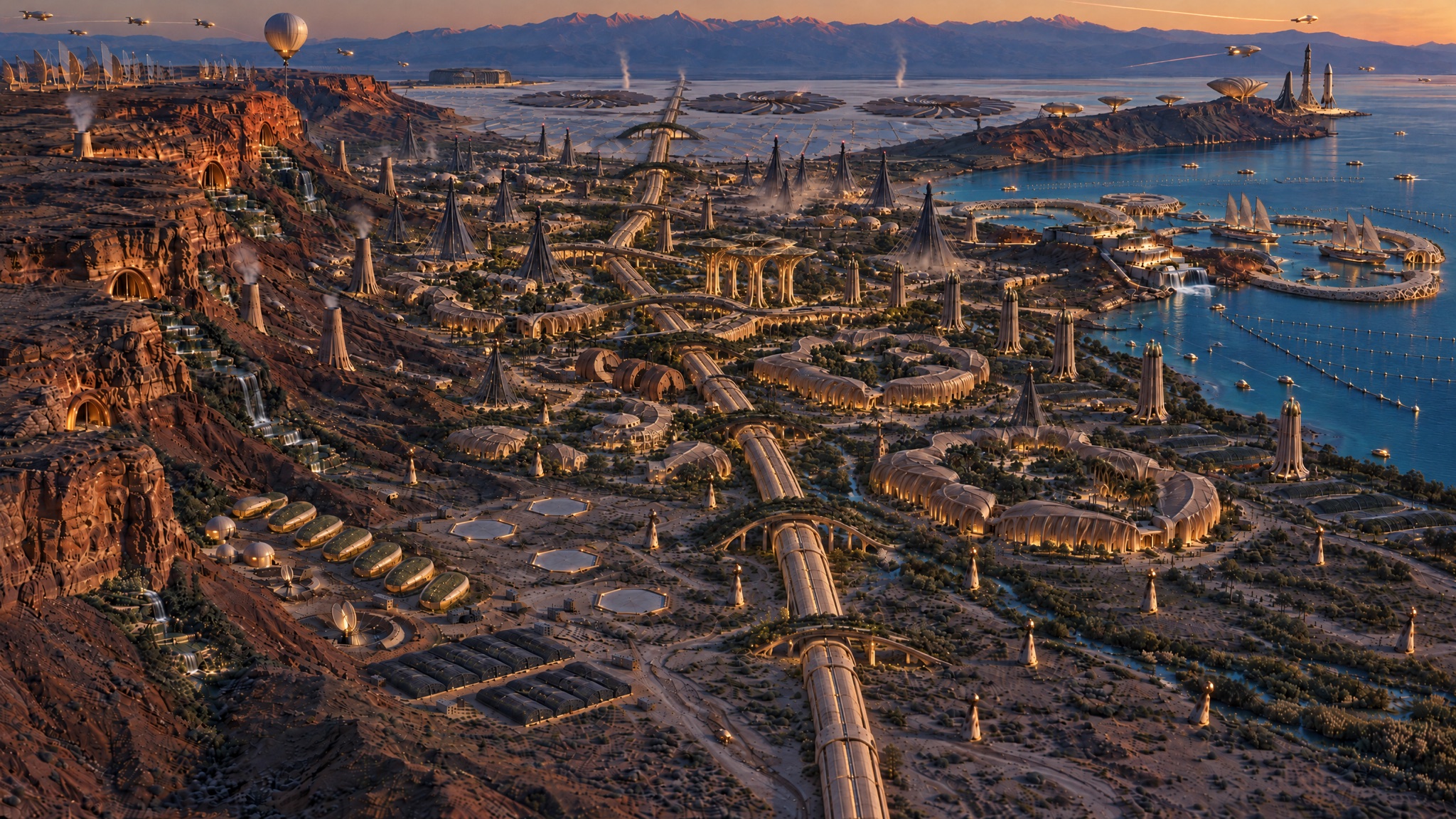
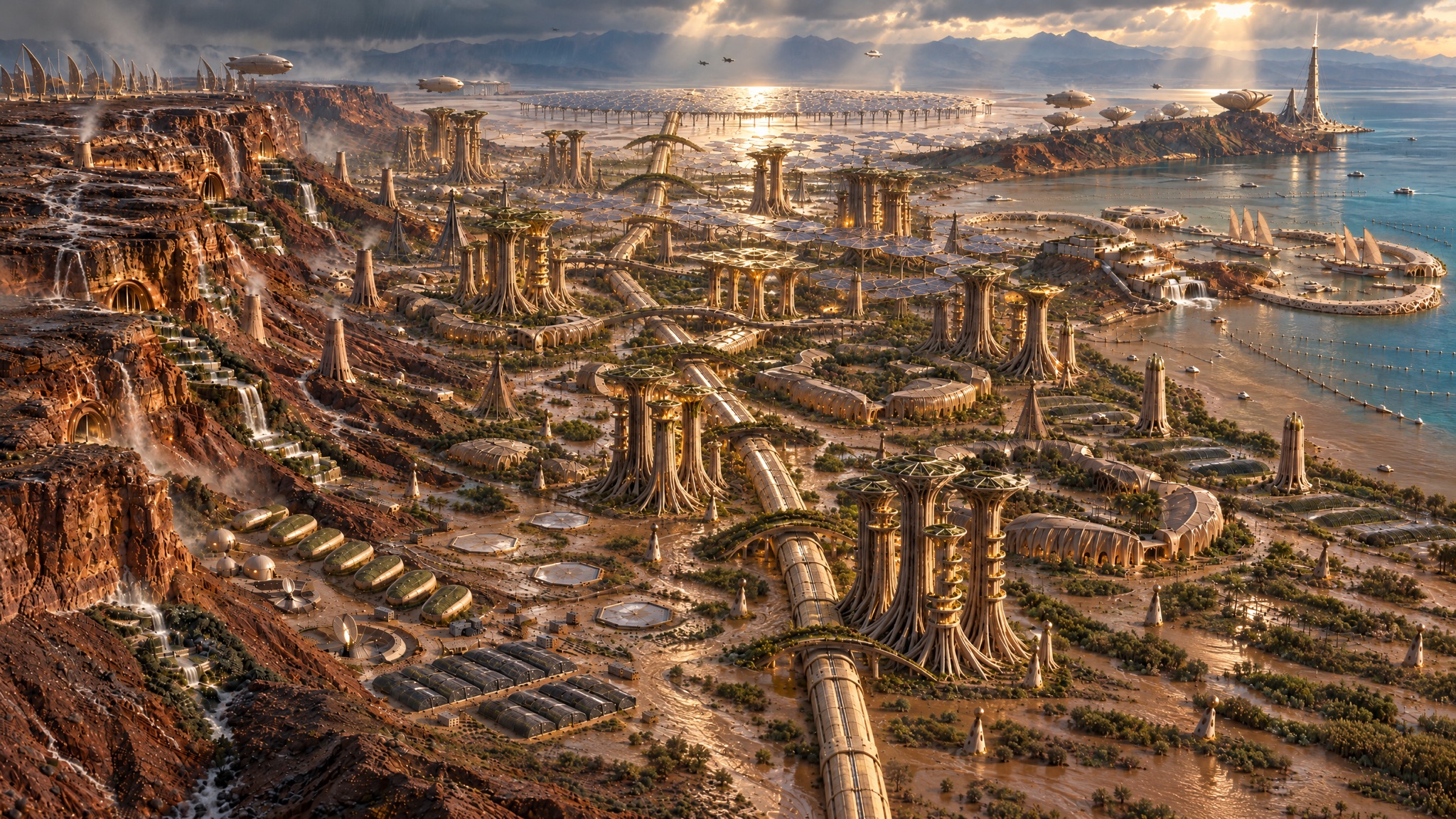
One fixed witness over an untouched desert coast. Everything after is measured against this frame.
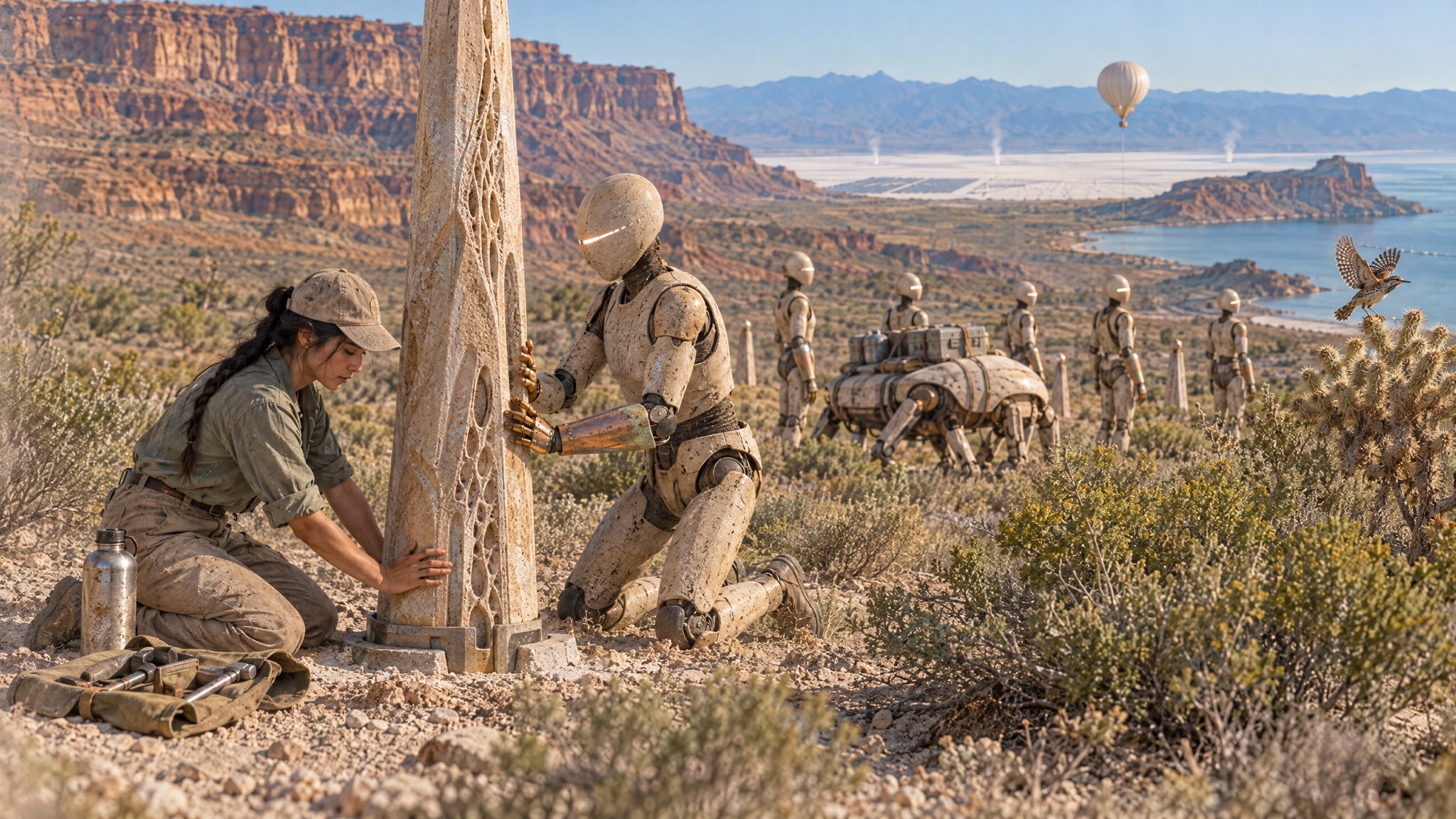
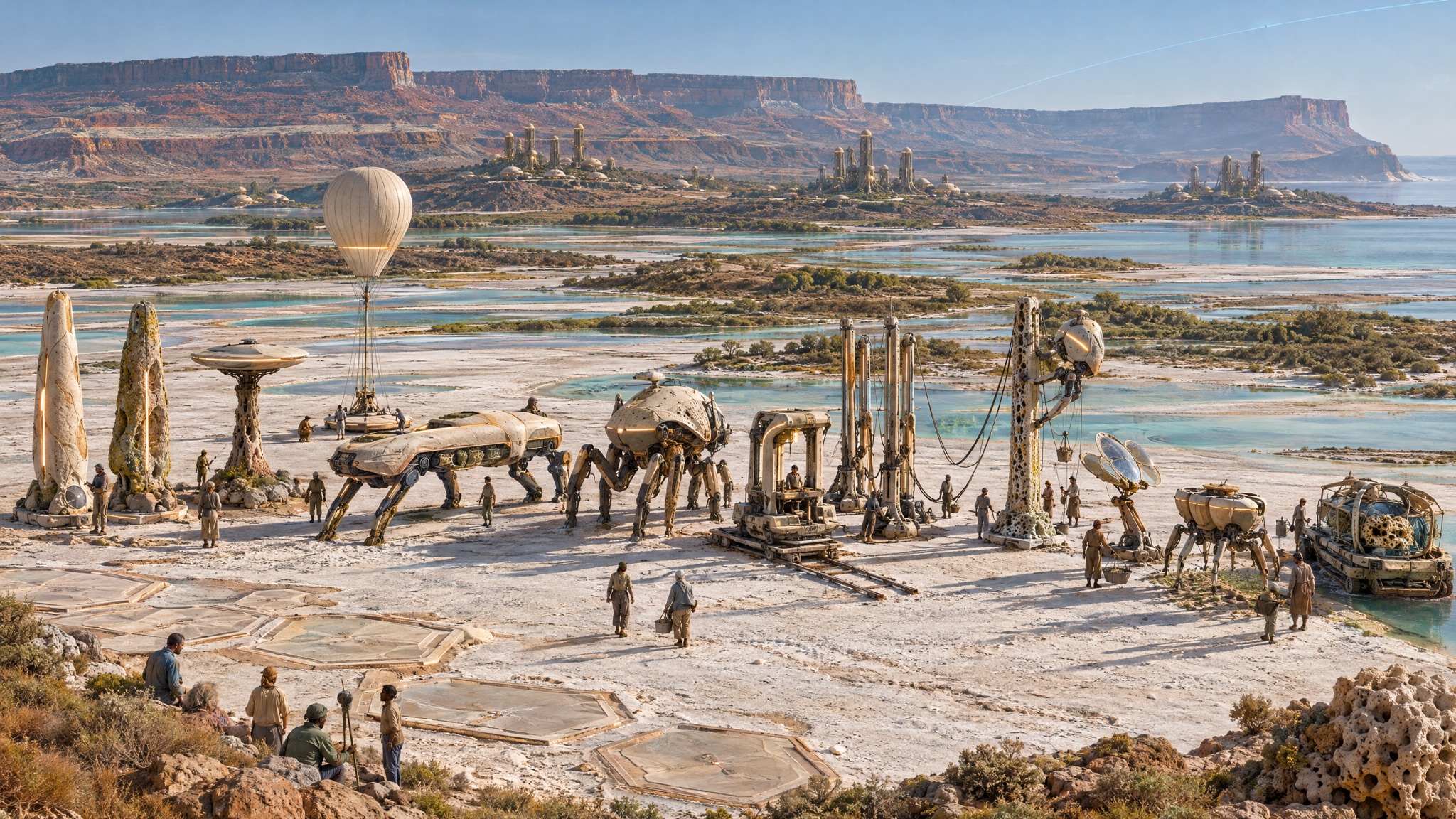
A hex lattice of sensor stones, a murmuration of survey drones, a pioneer camp and two trailer microreactors. Machines first, a handful of people supervising; the washes stay untouched.
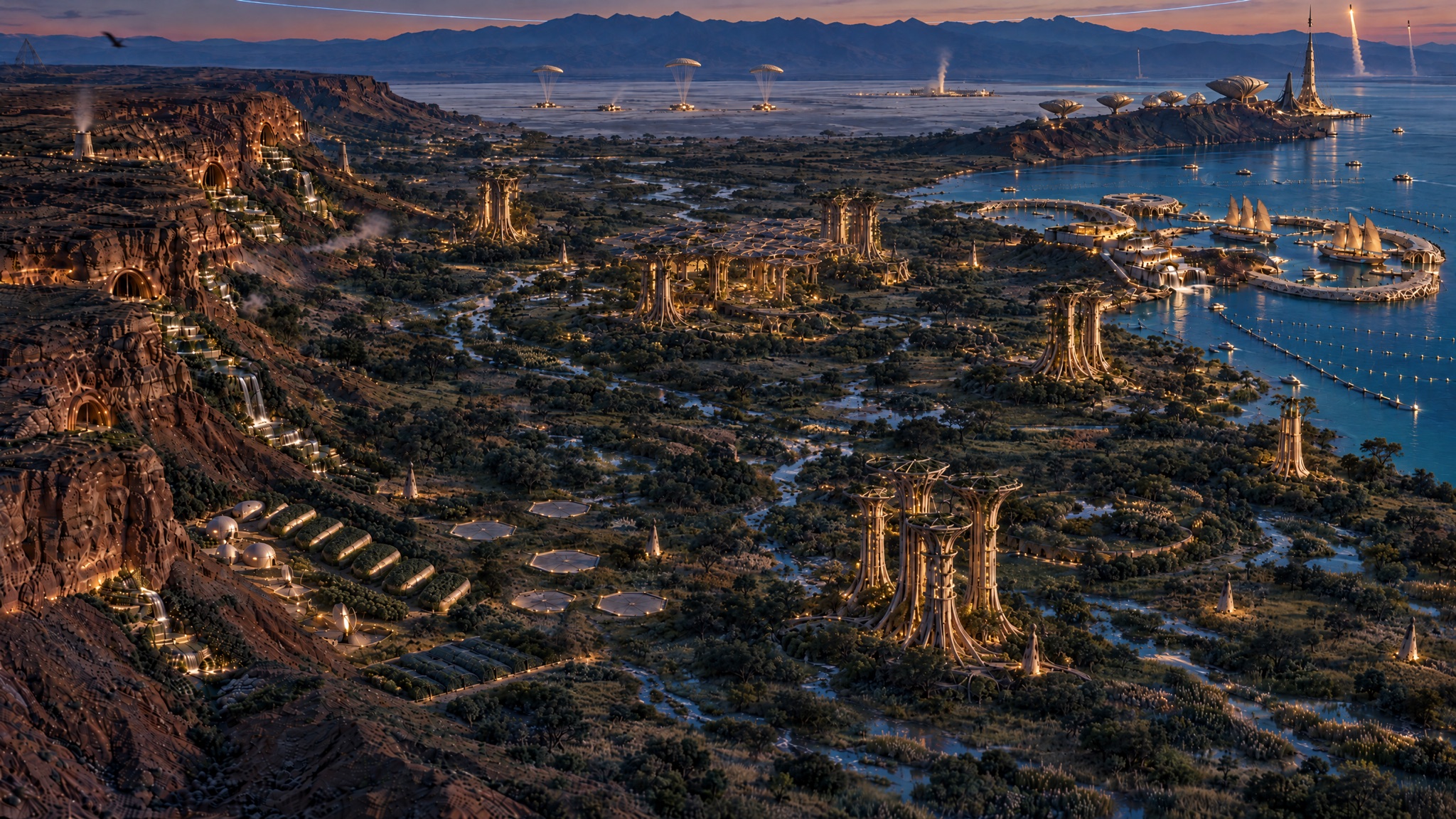
Spiral solar rosettes on the salt; compute in the cliff, breathing through termite chimneys, its heat making fresh water; the first green runs down the wash.
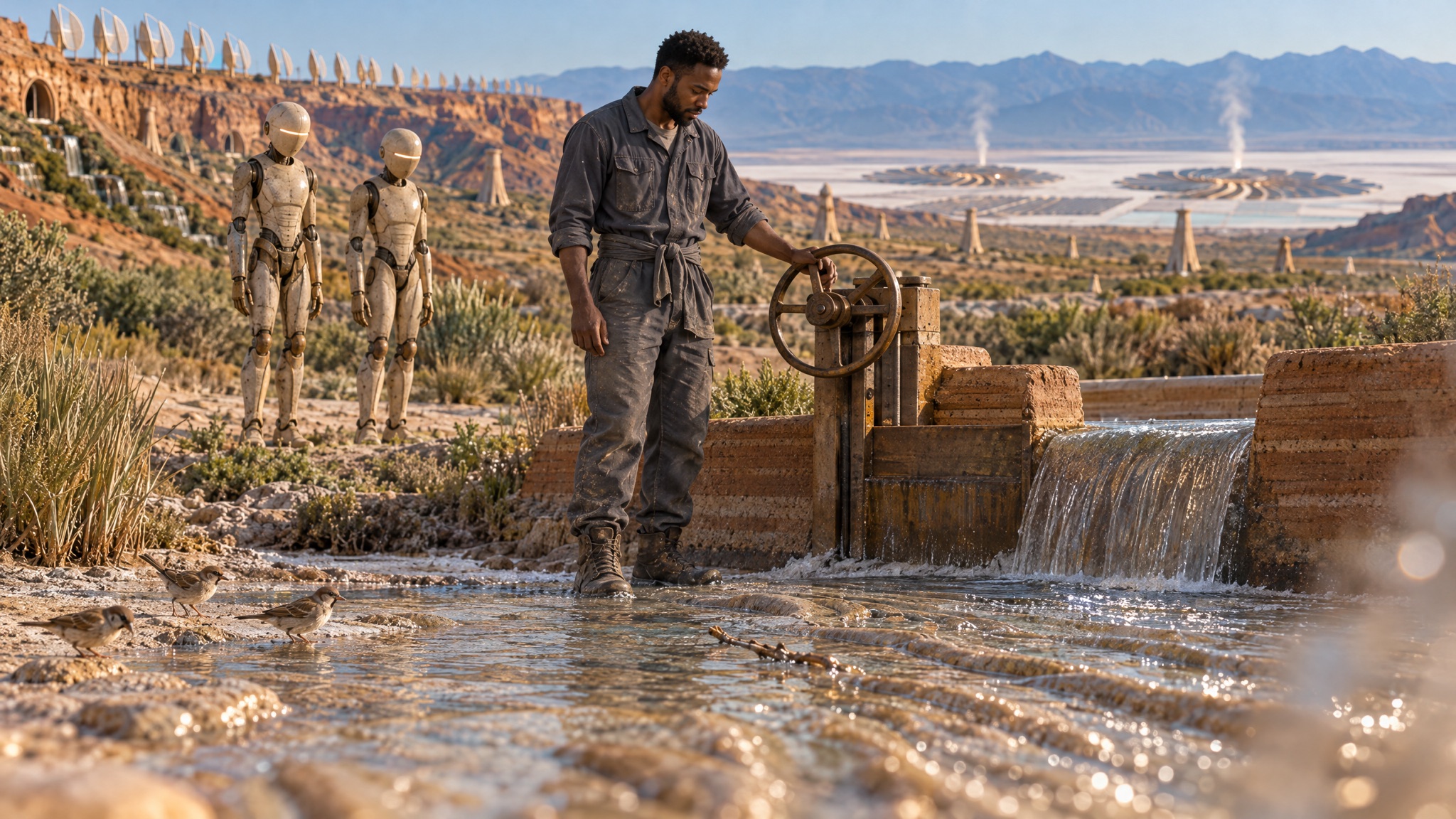
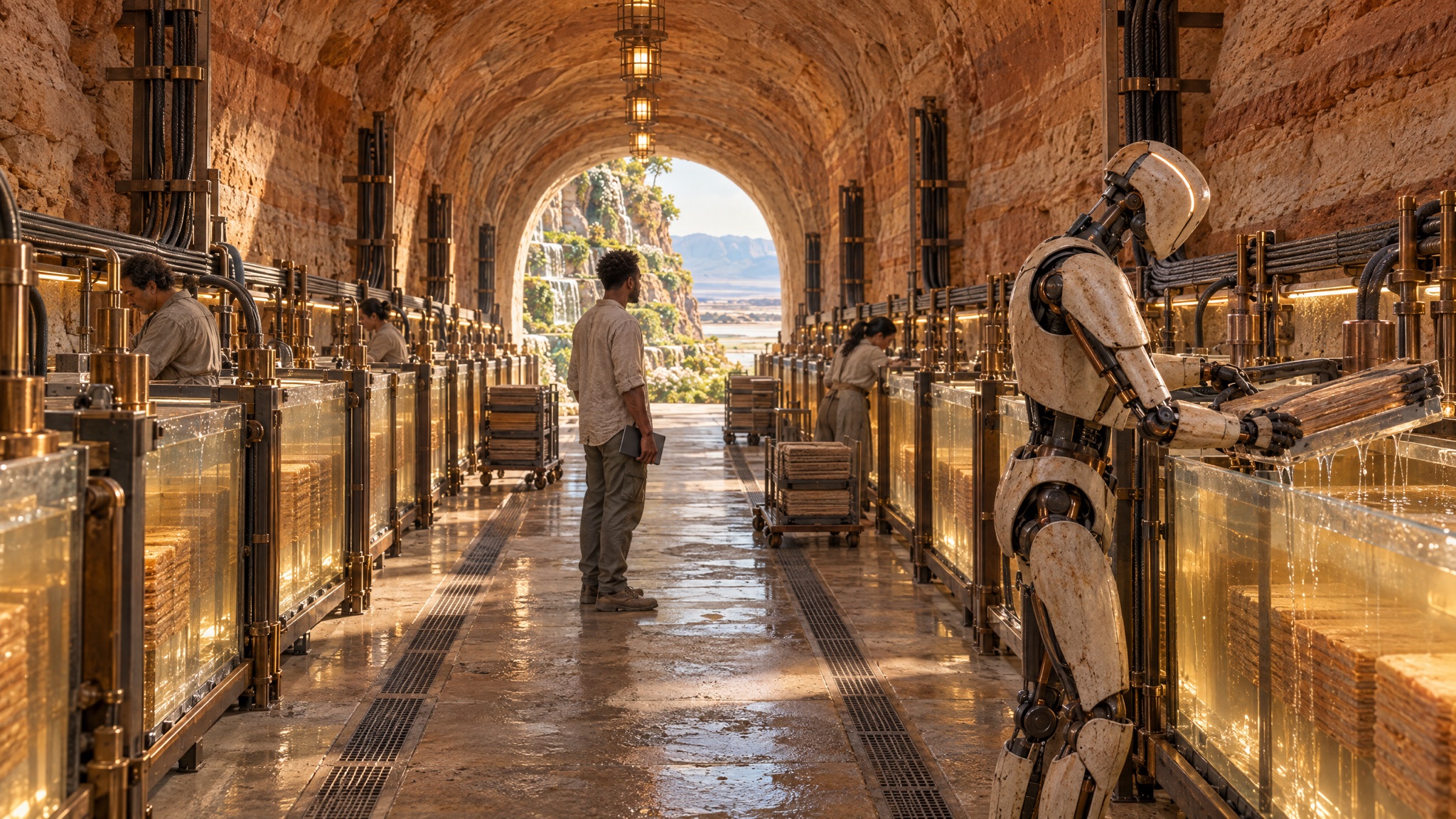
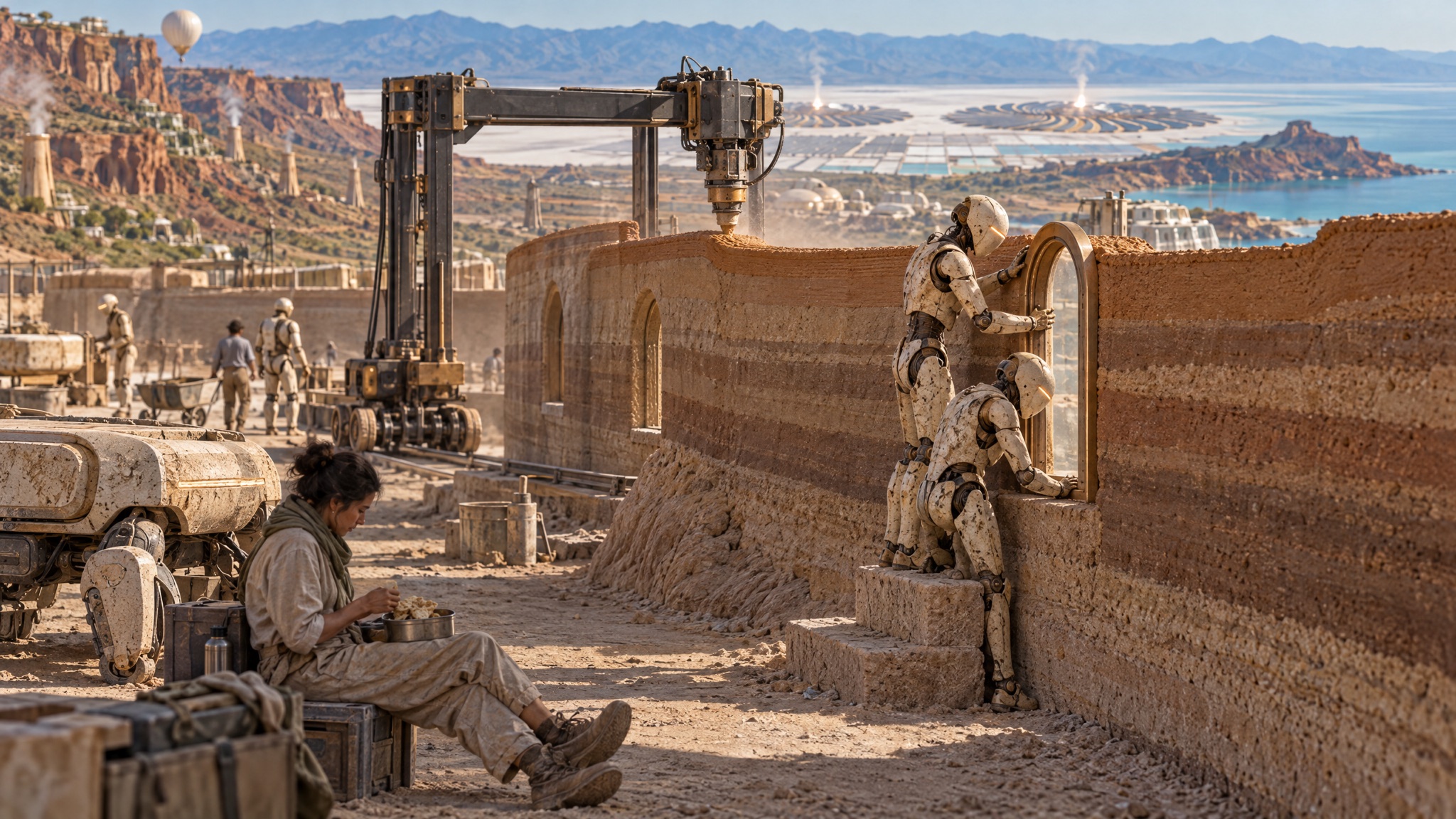
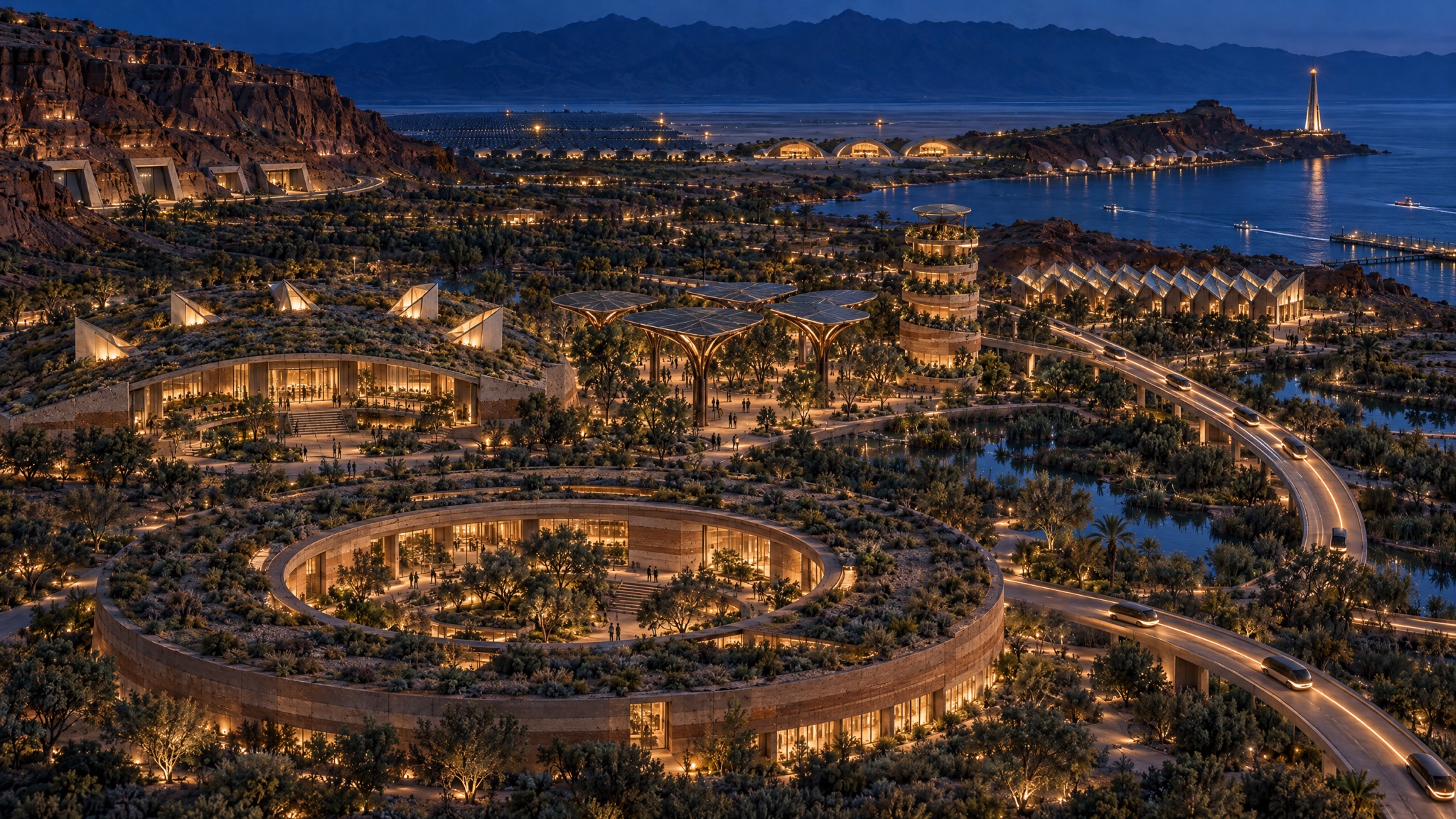
A real town and a good neighbour: cell-like districts, farm towers by the wetland, brine terraces graded like a swatch, and the first launch from the headland.
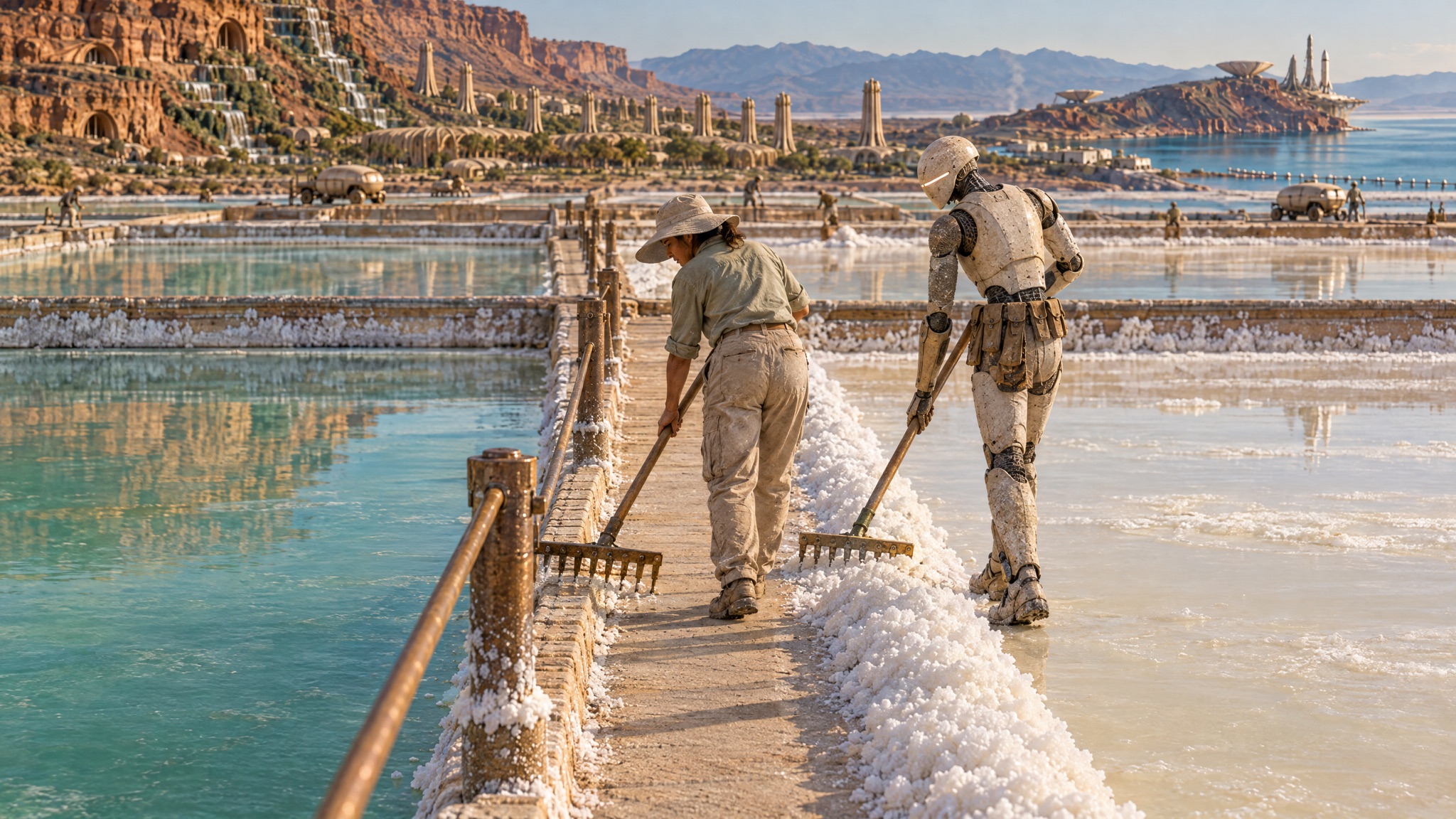
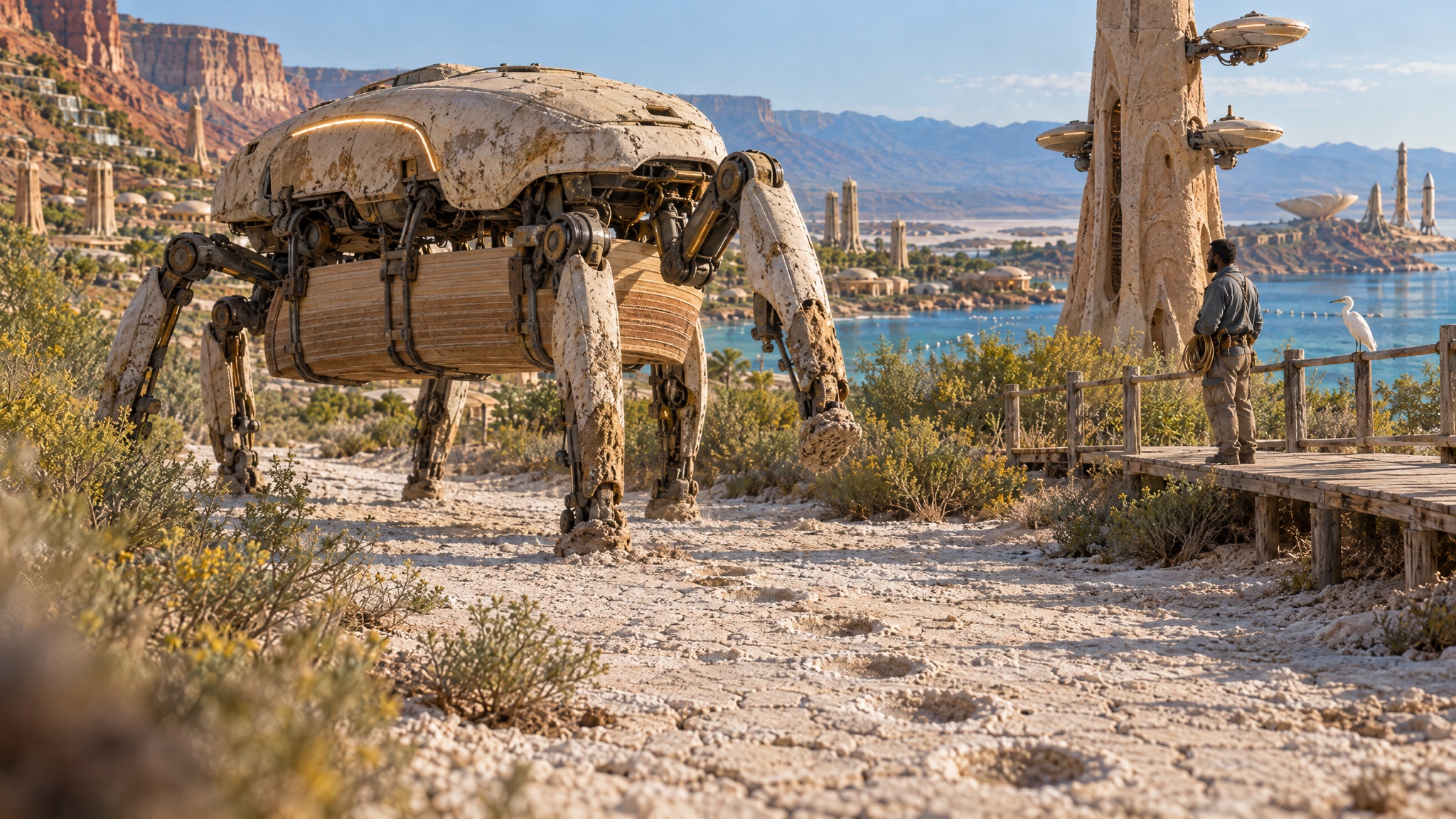
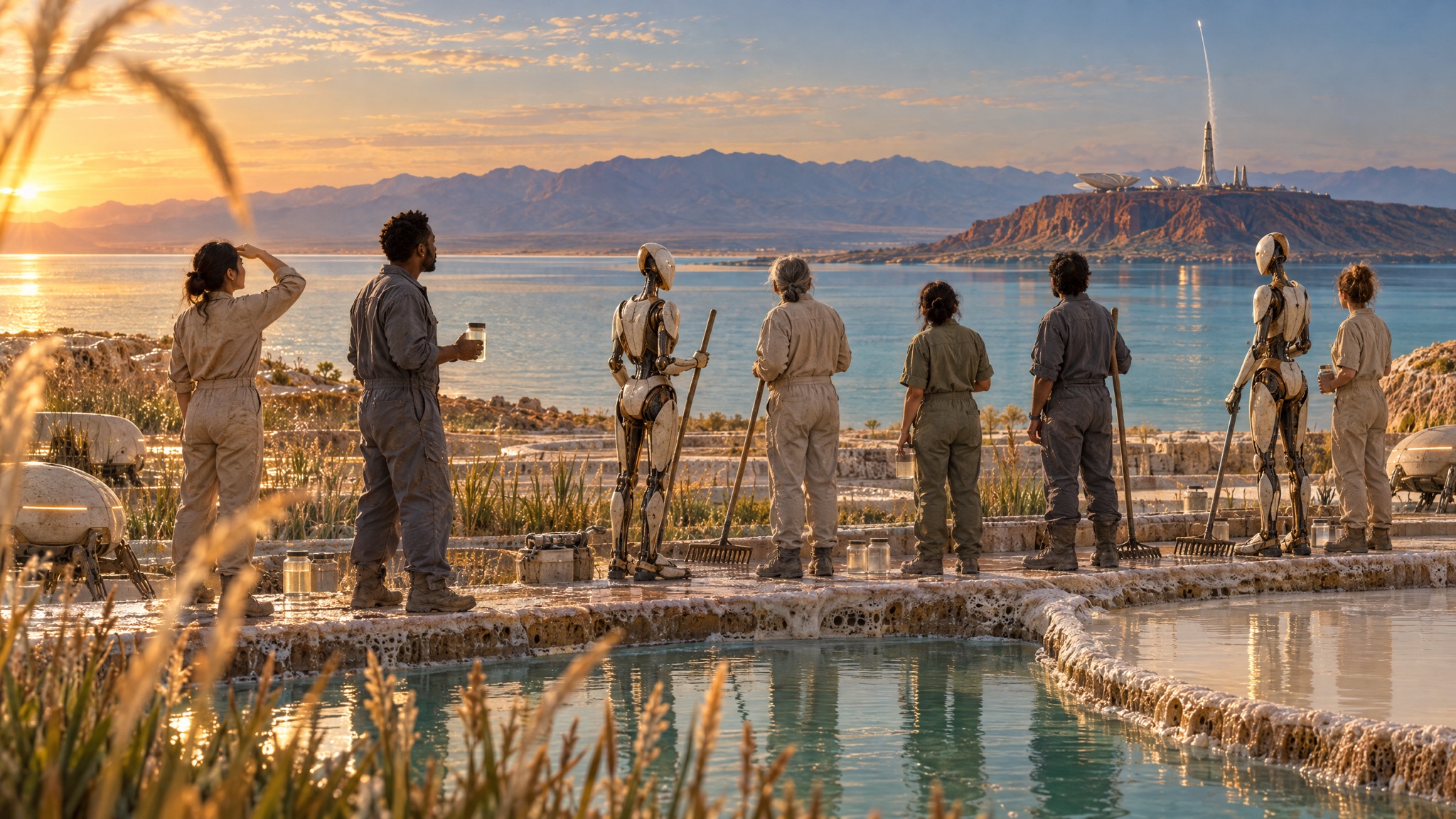
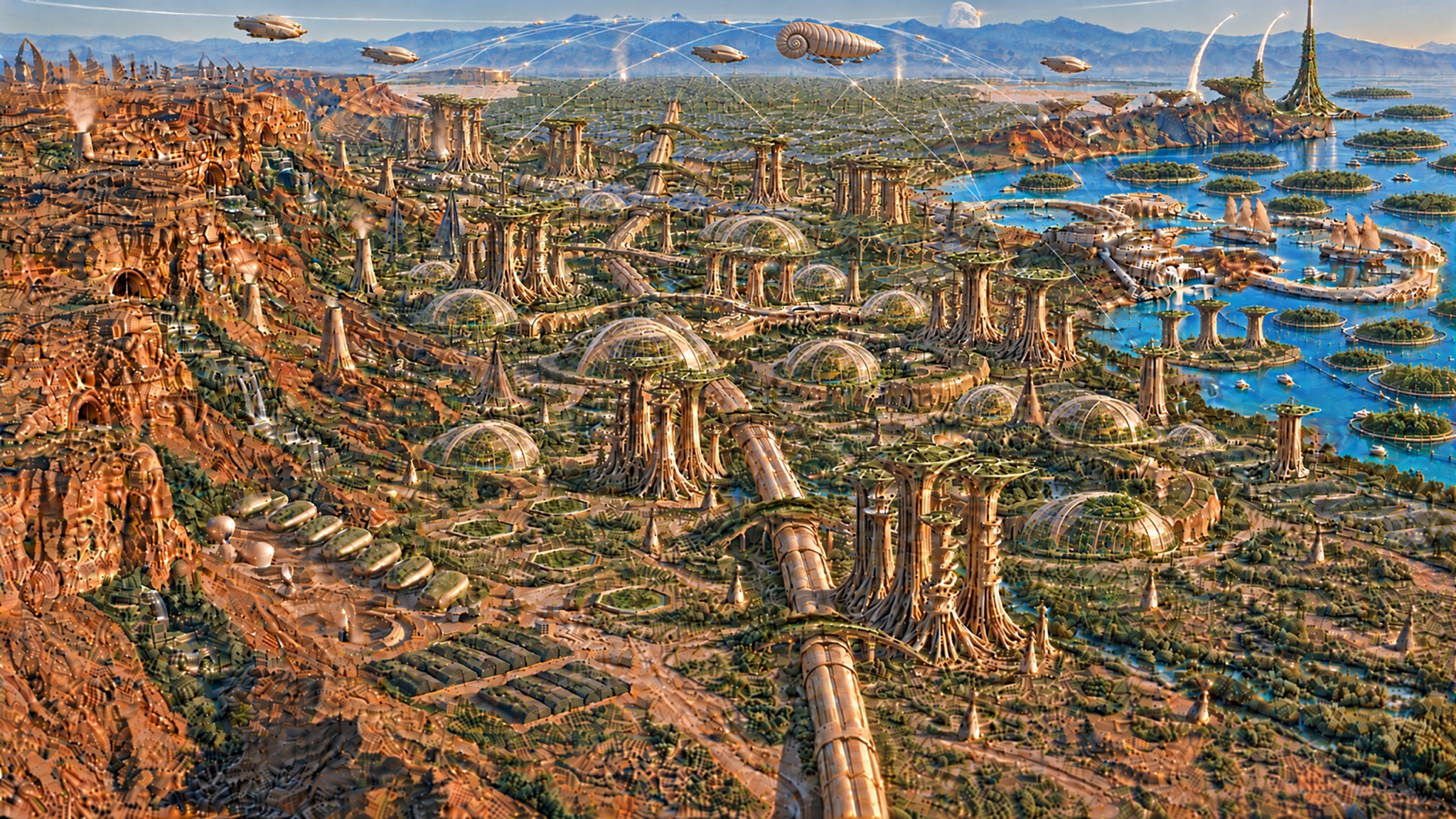
The Vein carries every trip, cable-hung masts print whole districts, a brain-coral harbour holds wing-sailed ships, and launches go weekly.
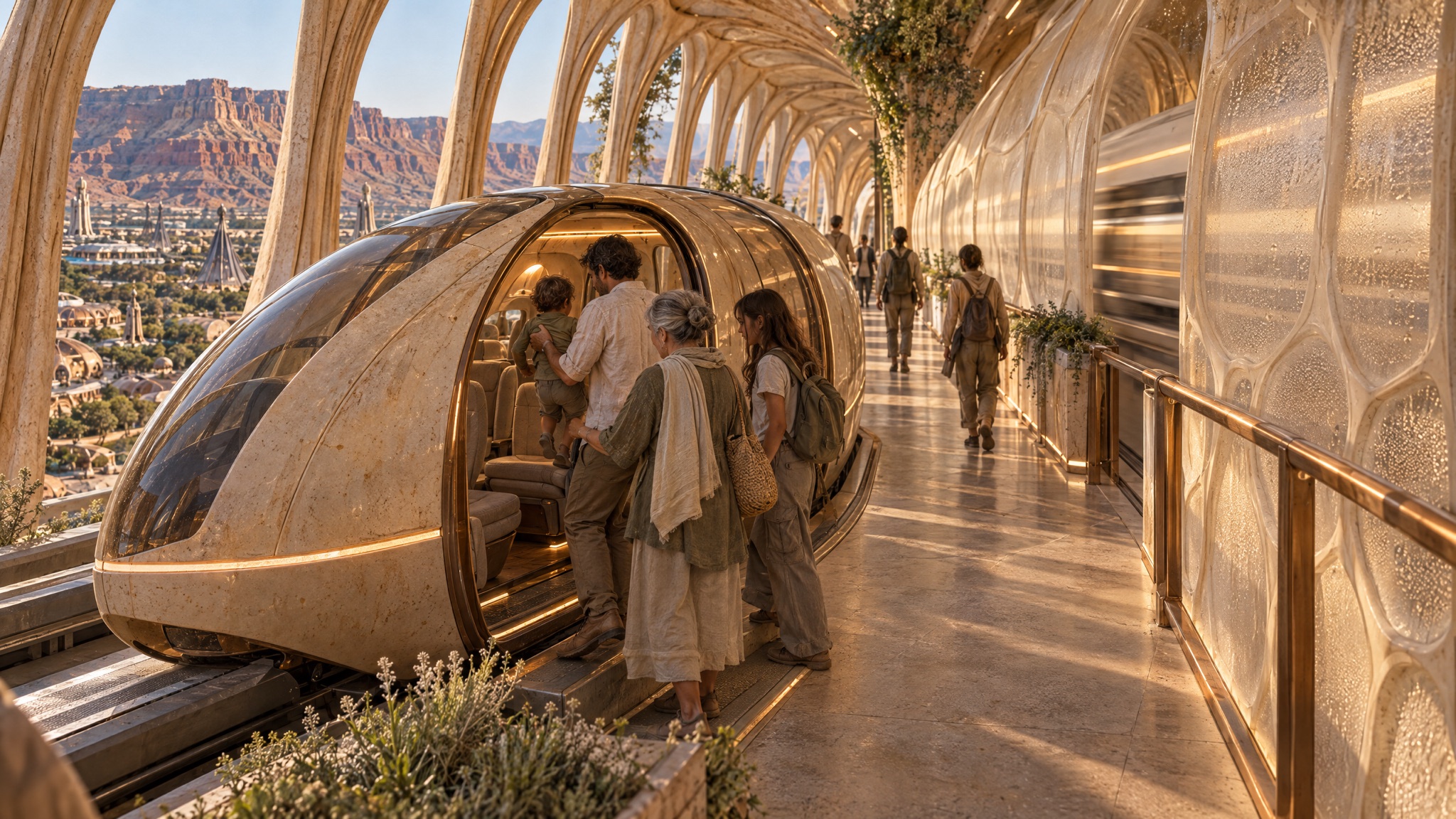
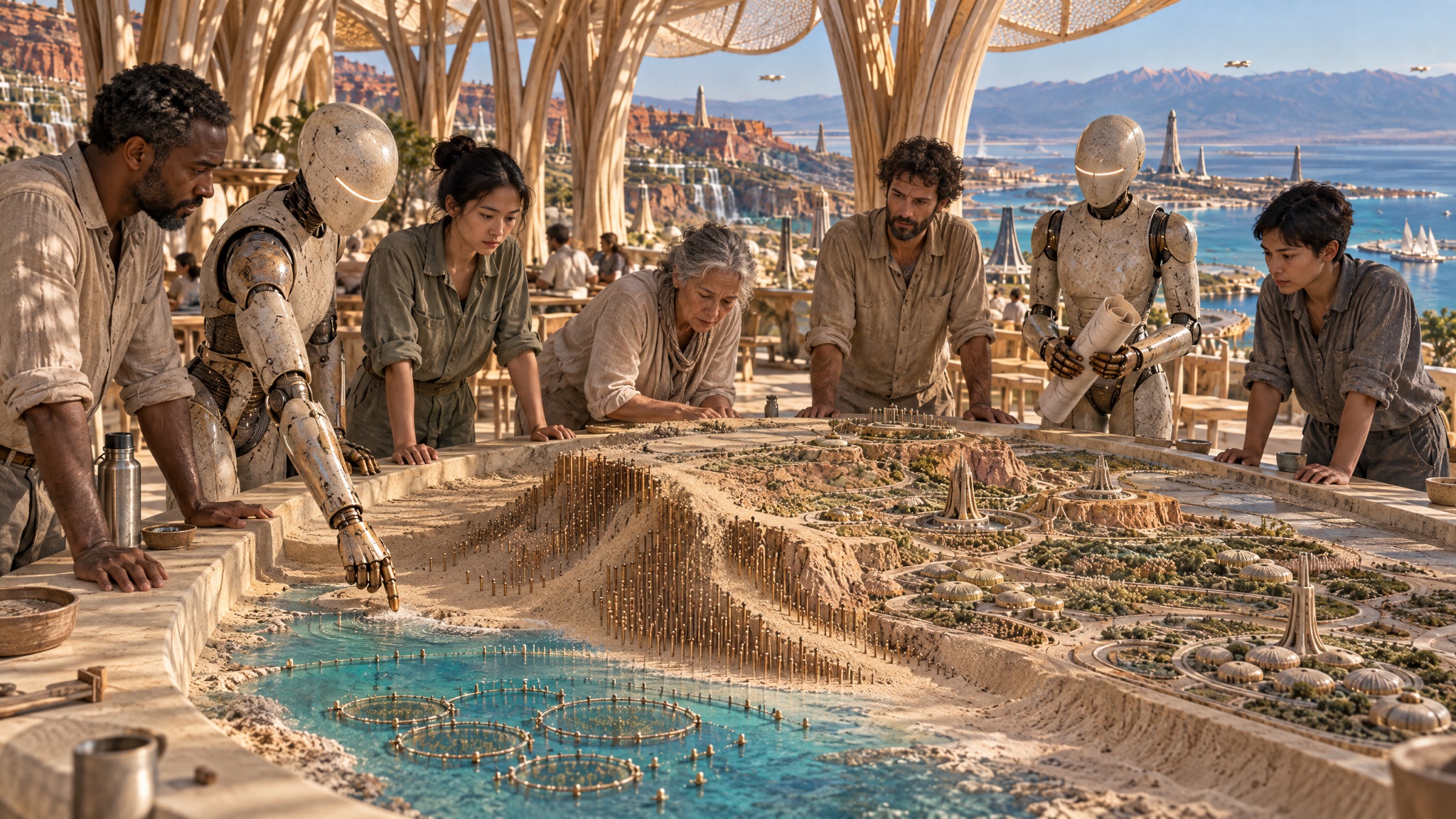
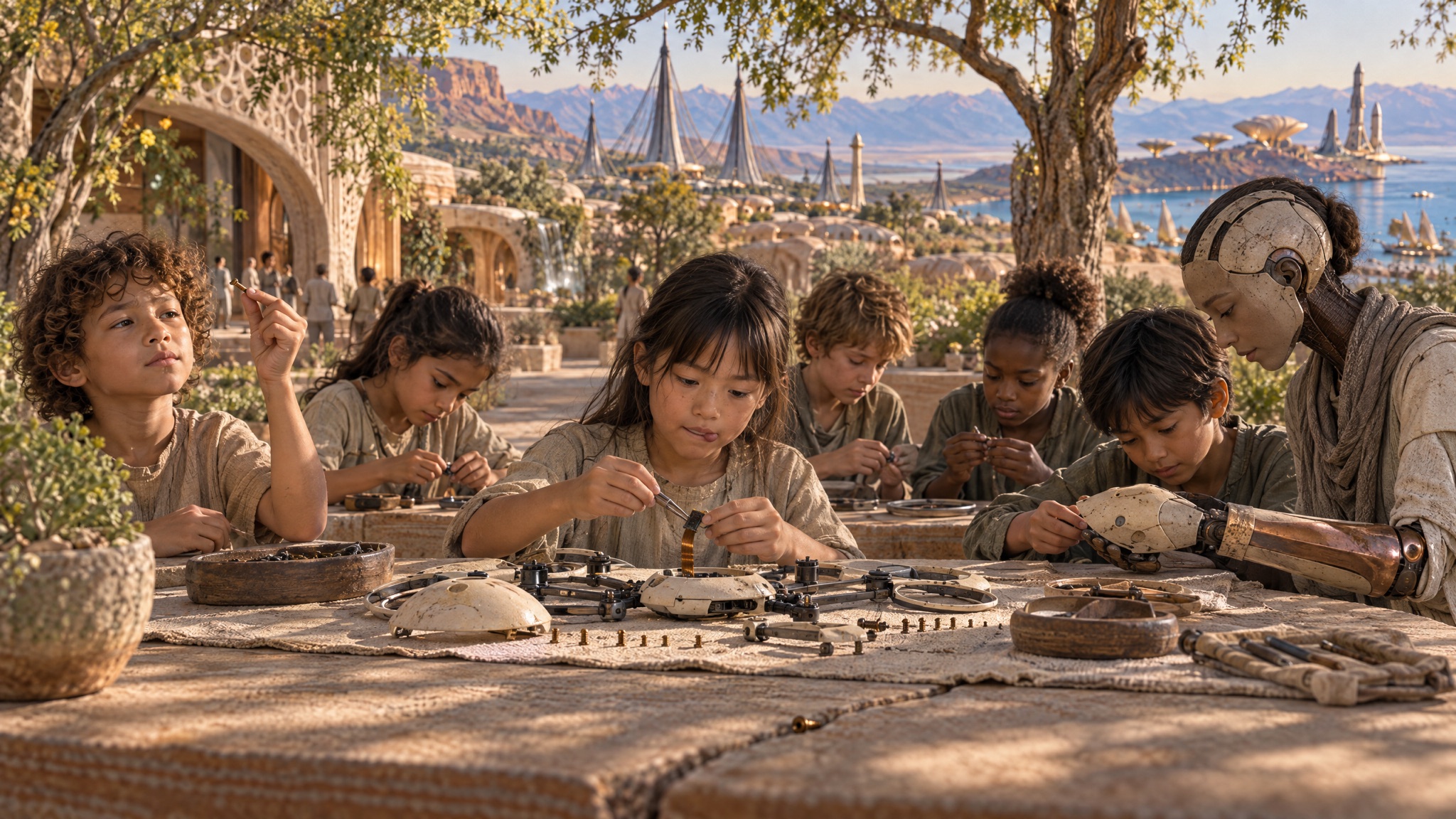
Taproot towers rise at the wash confluences, power arrives from orbit, and a tether roots the headland into the sky.
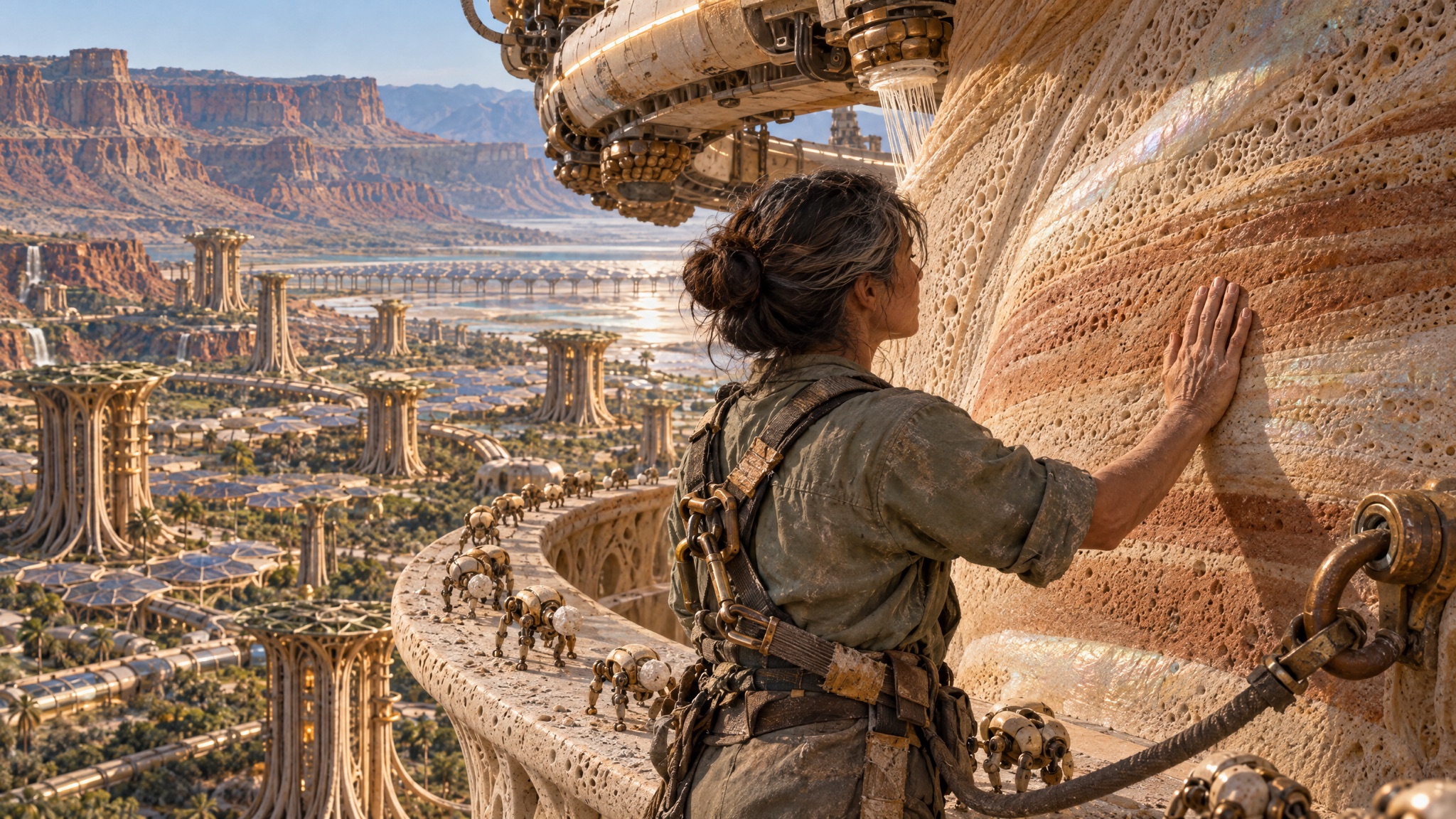
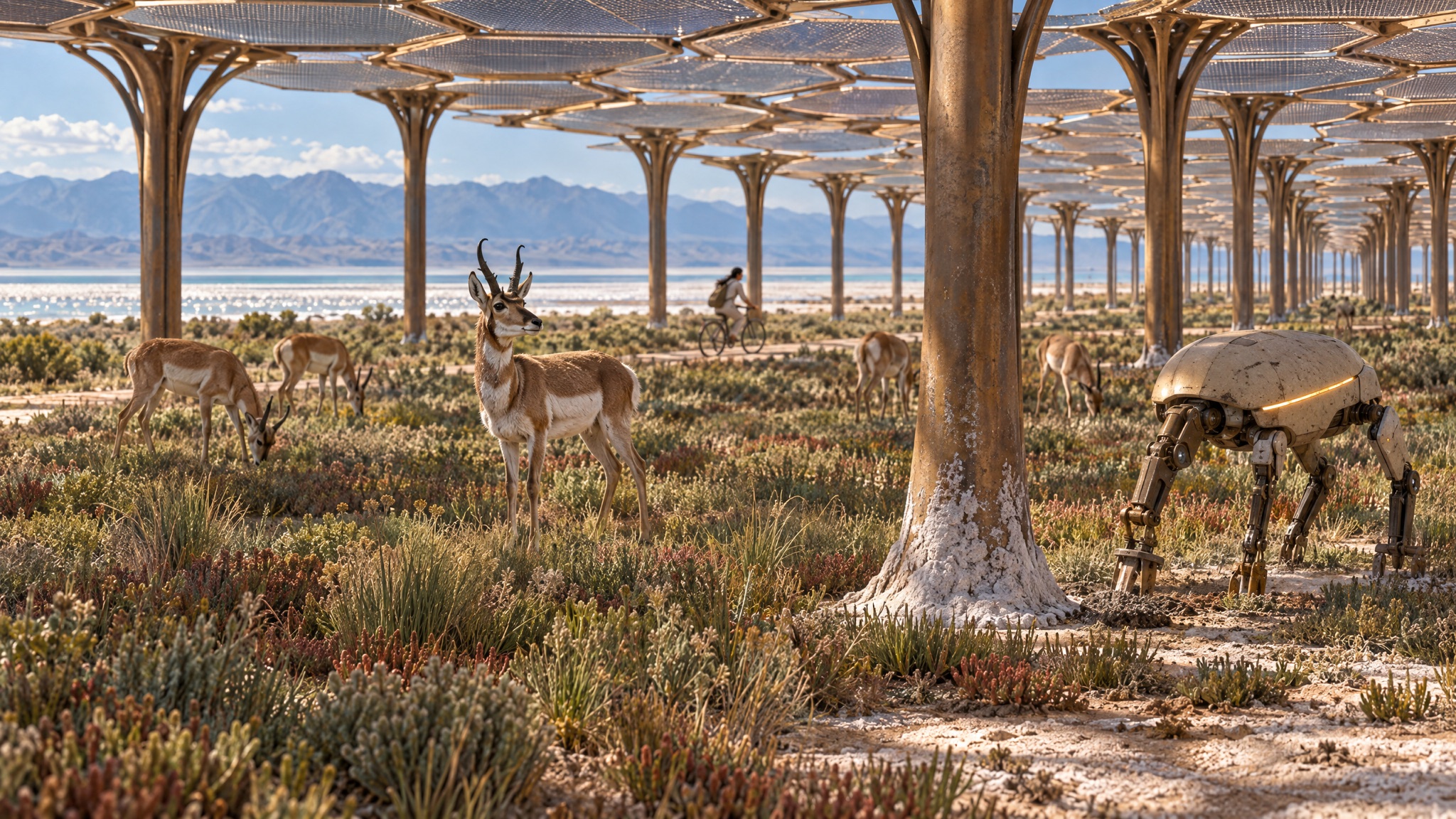
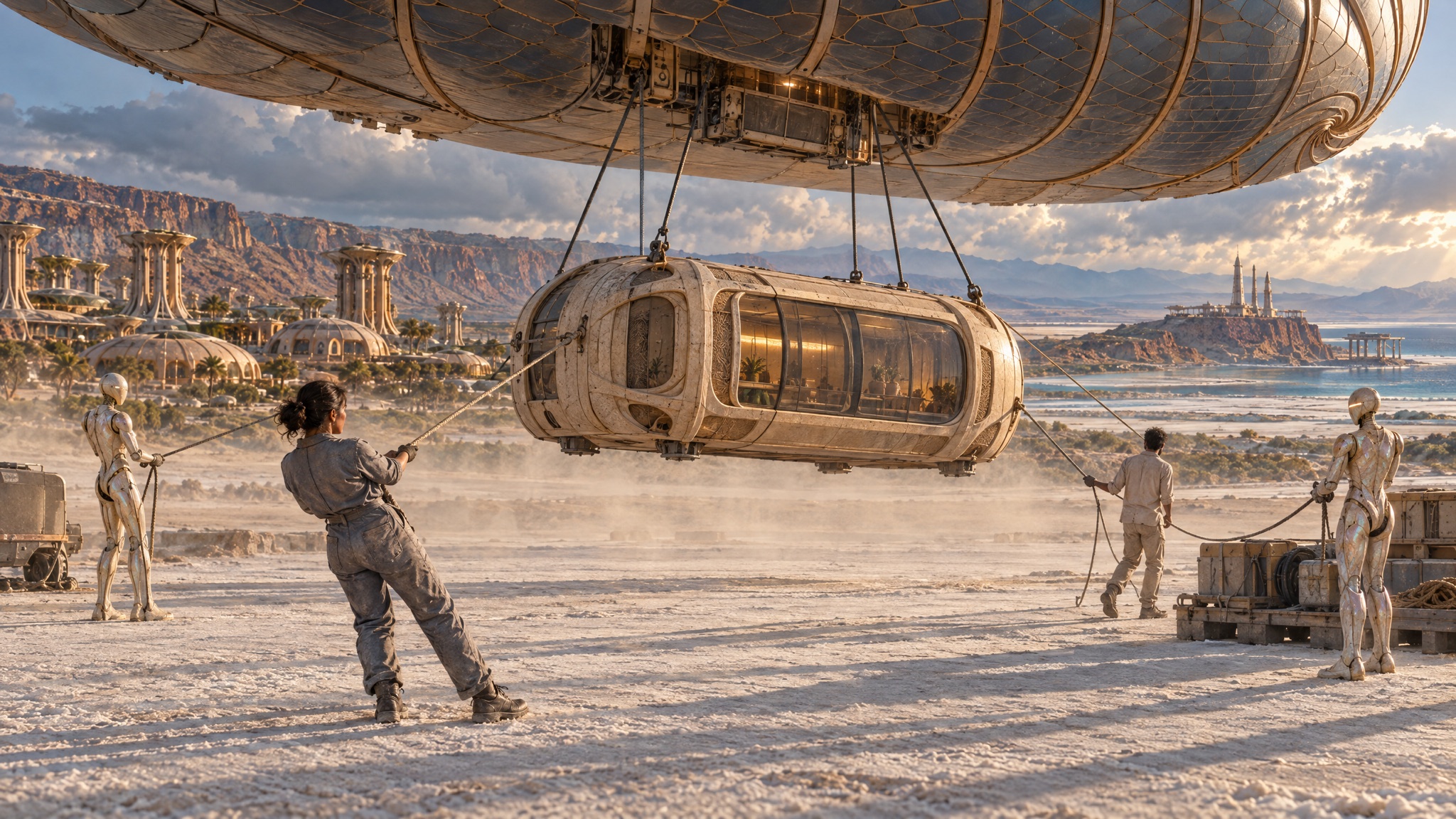
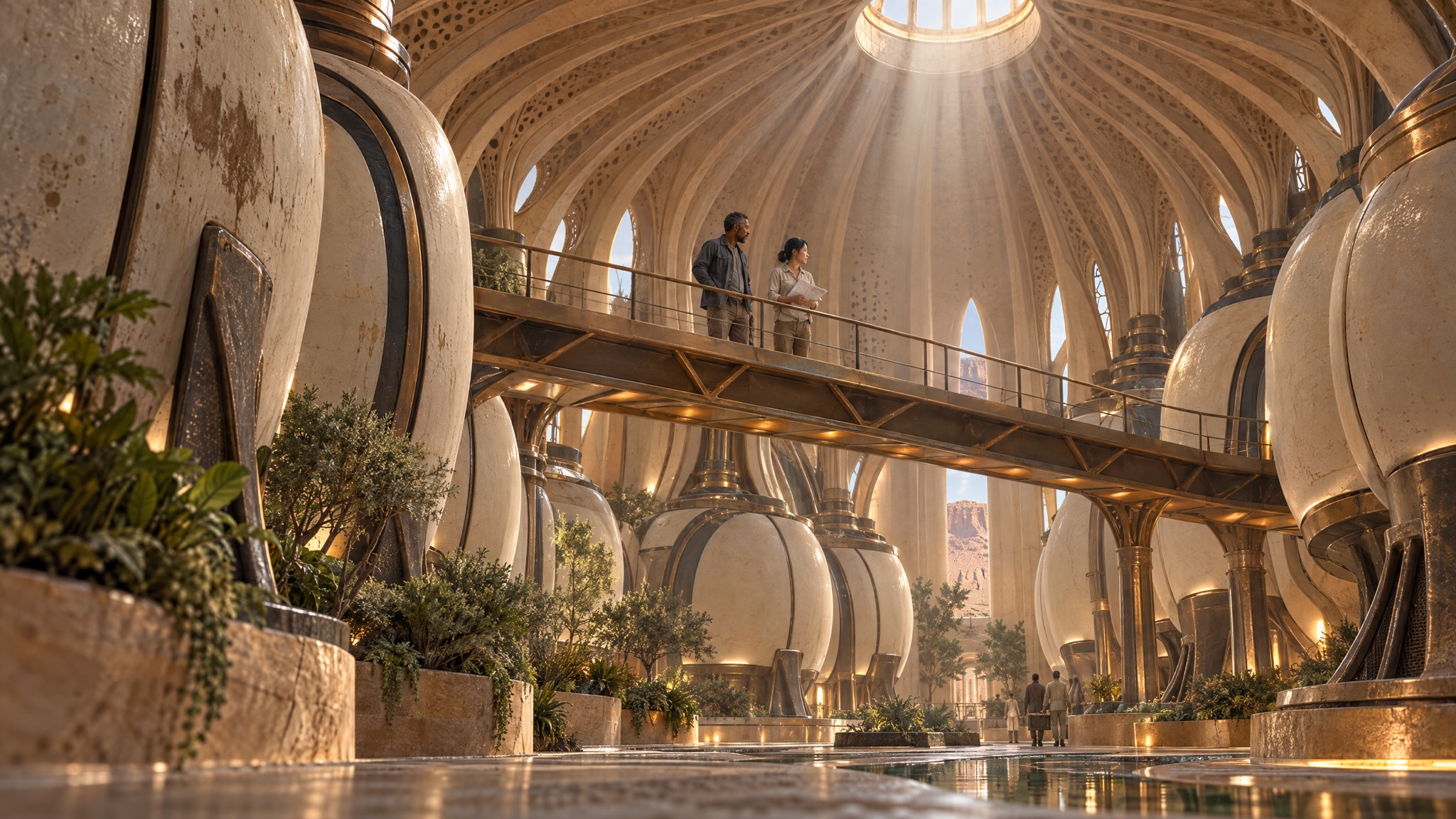
A tether rises from the headland to an orbital ring, launches go daily, and the first living shells grow among the towers while the green keeps spreading.
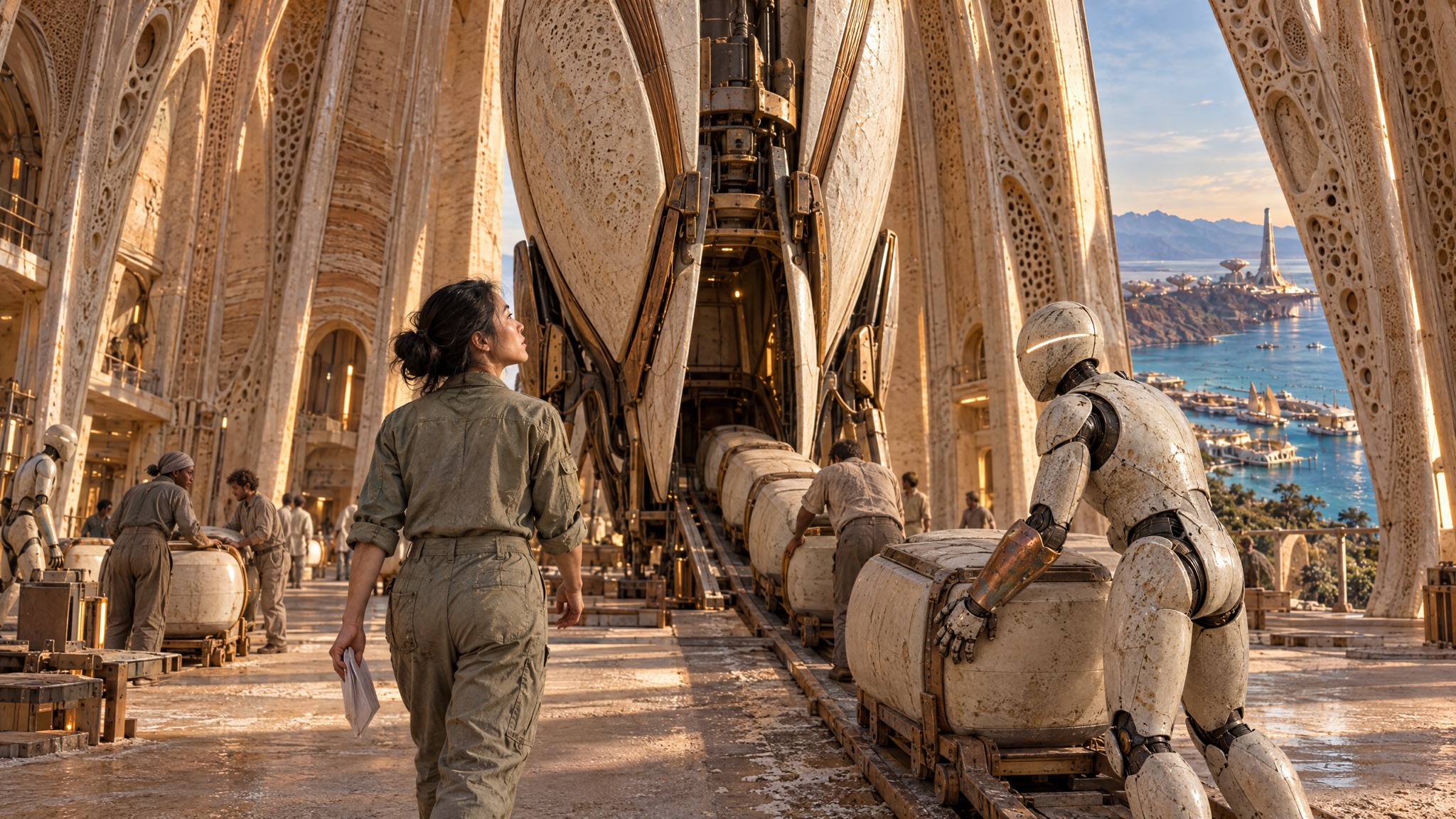
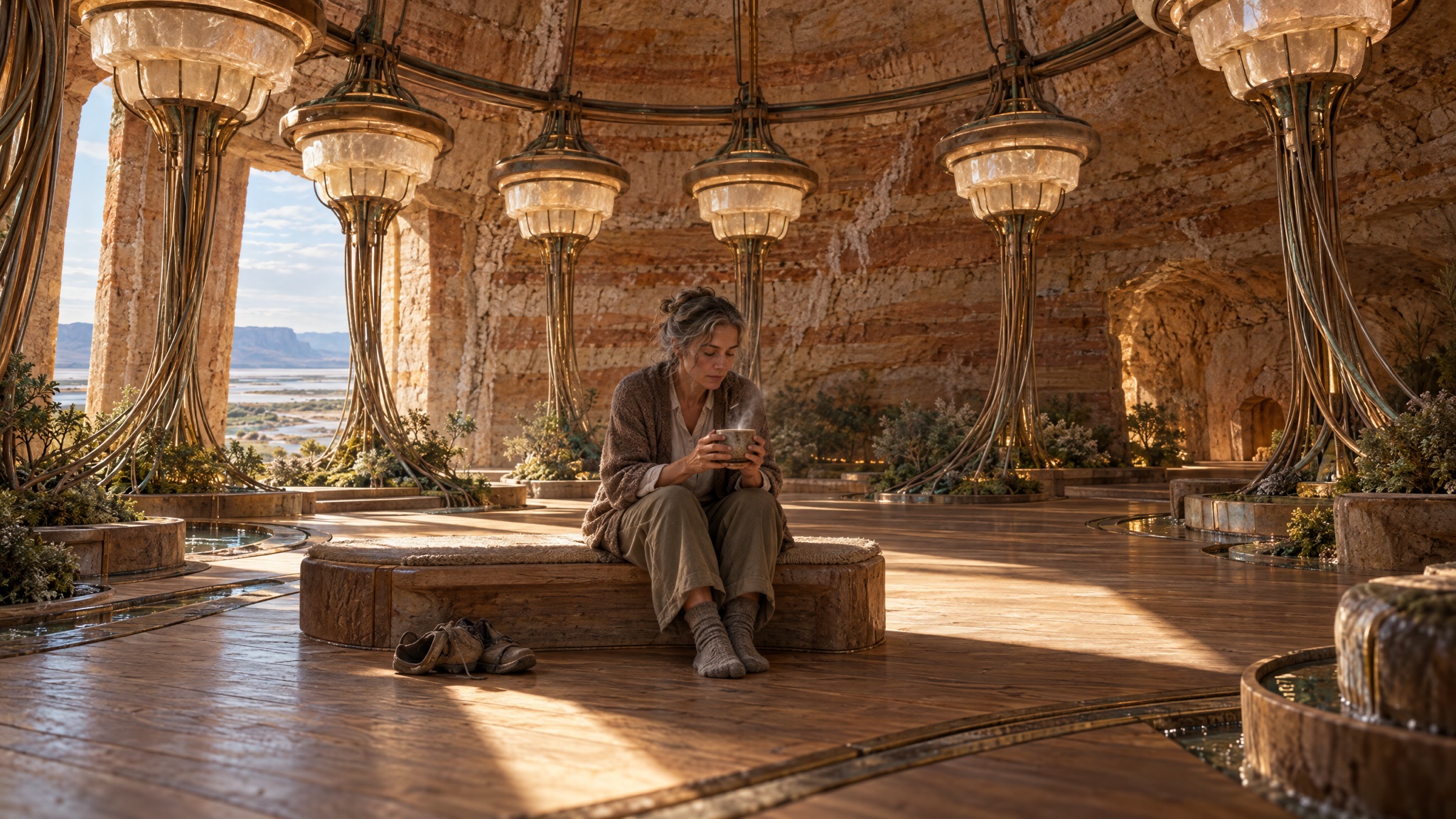
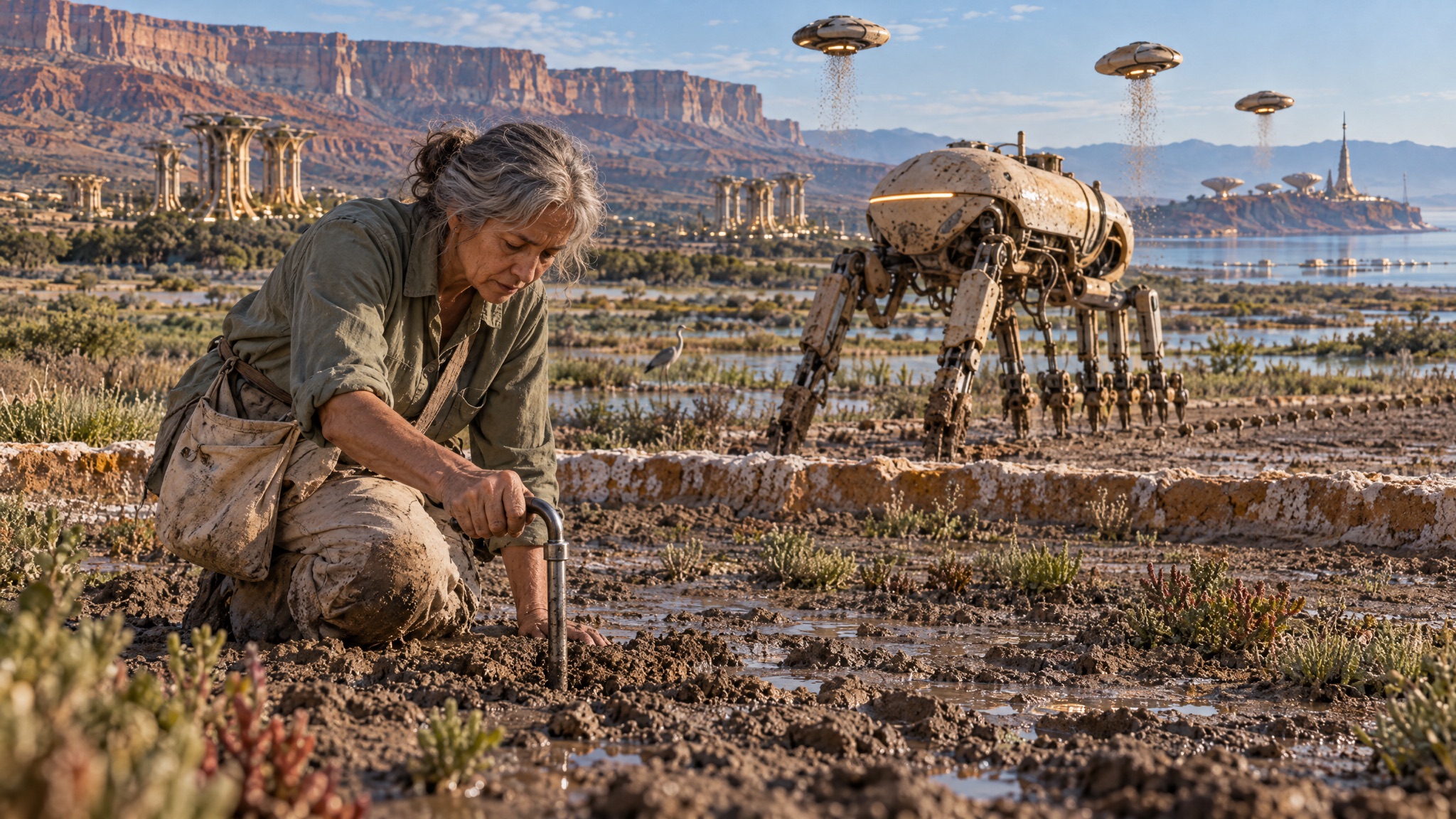
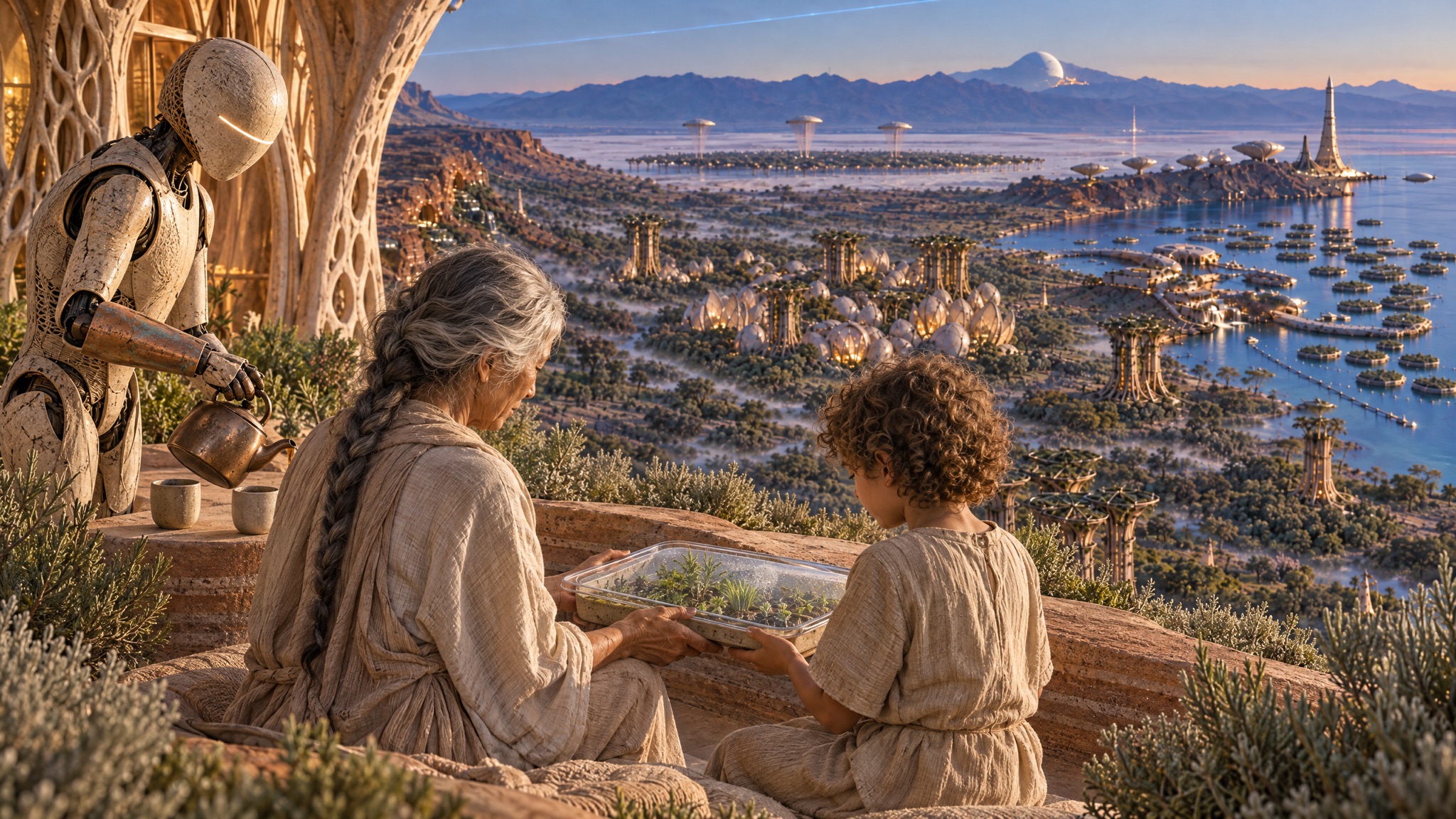
The same city, matured: living shells among the groves, a lattice of light above, and the seeds gathered in 2027 bound for a settlement on the Moon.
2026
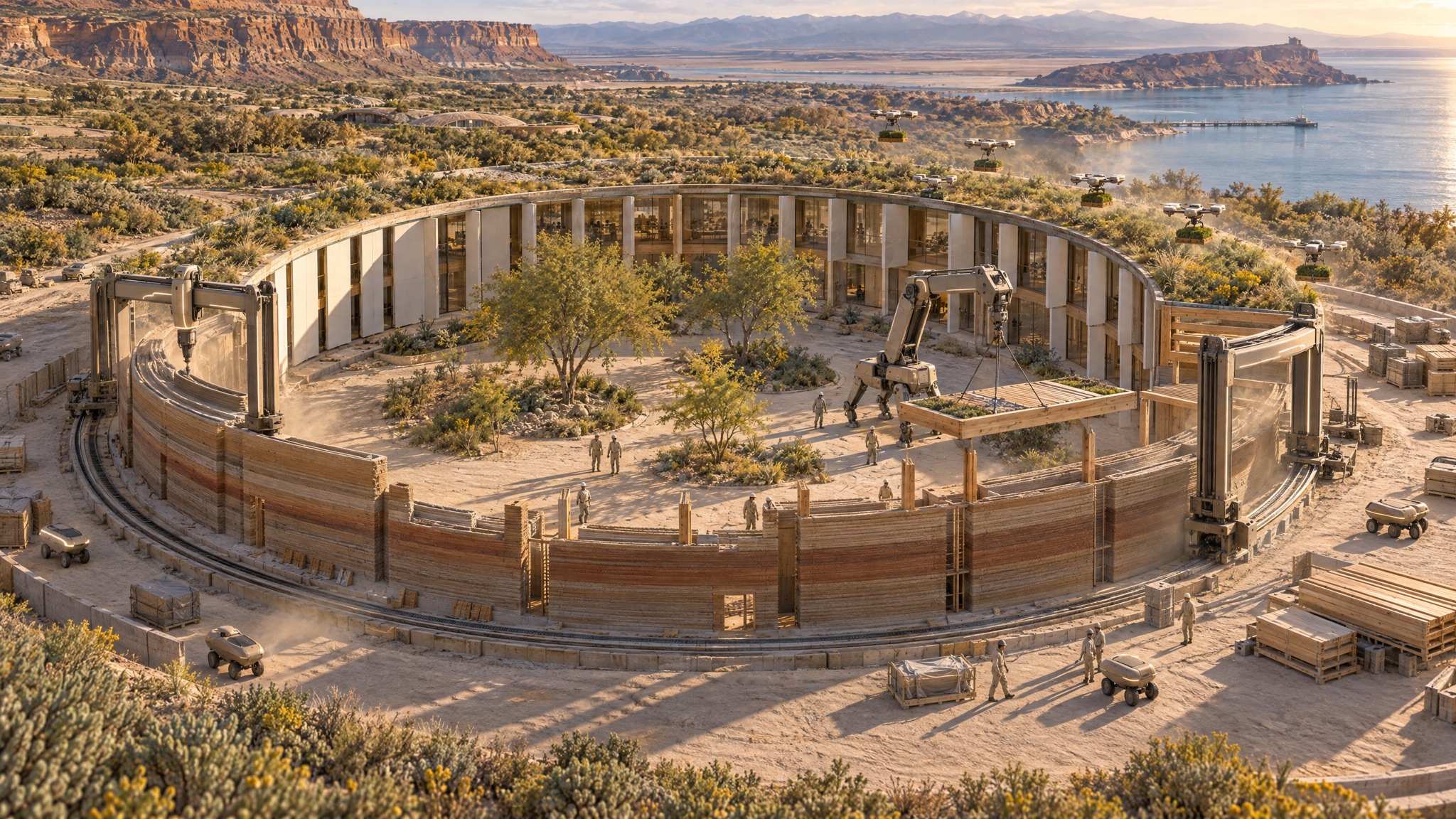
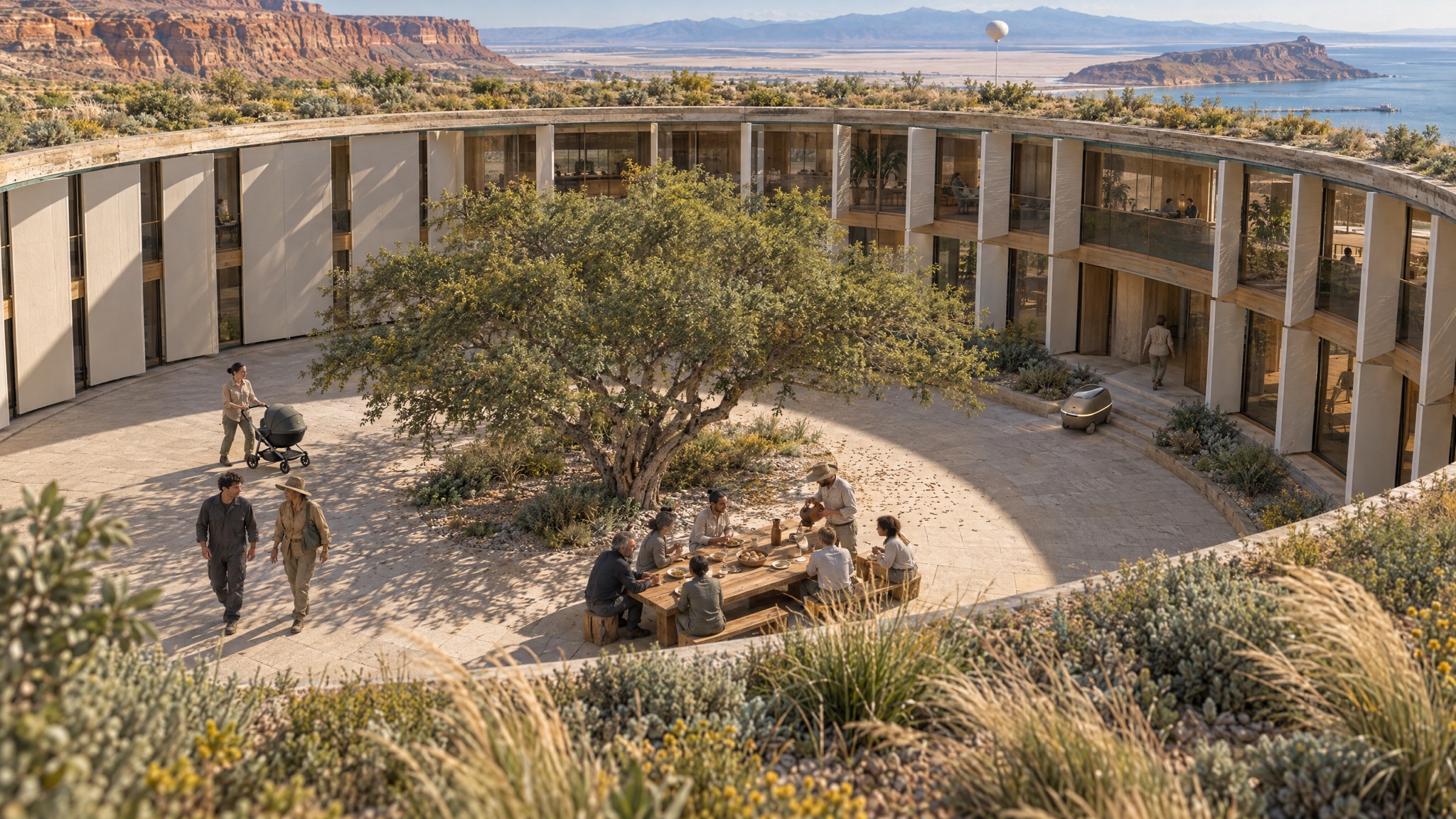
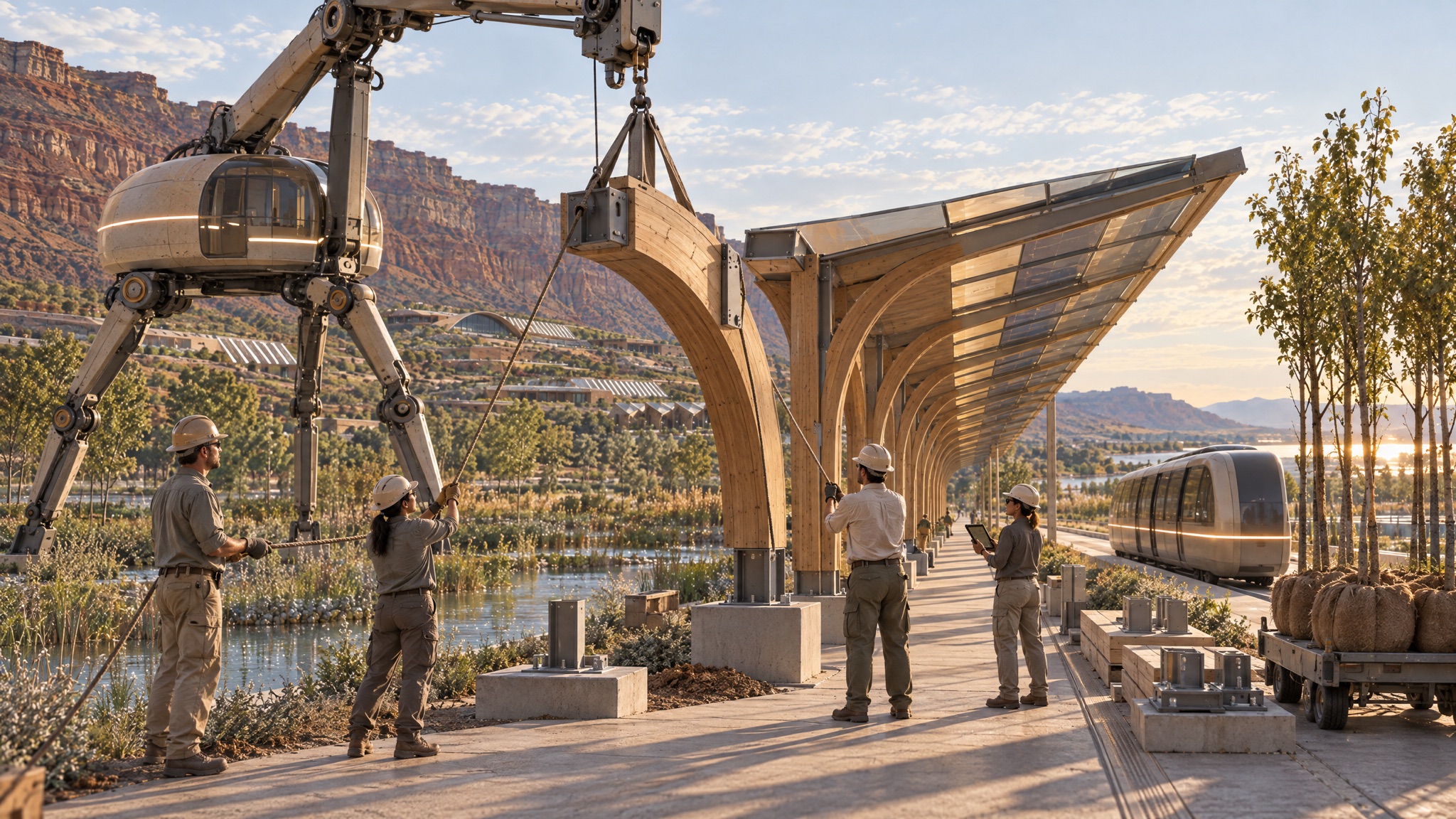
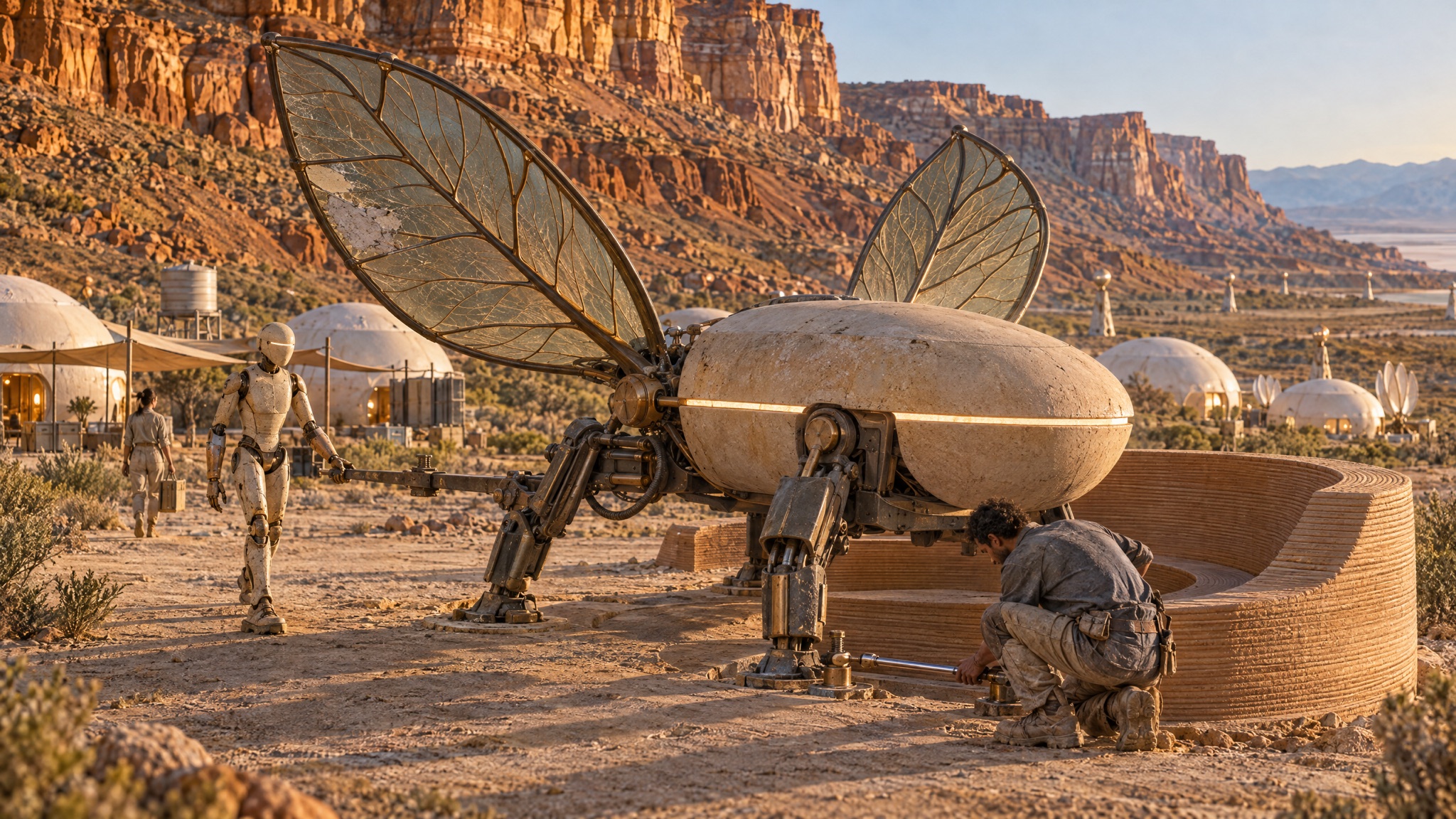
Nothing arrives finished. Printers lay walls from the basin's own soil, drones plant the roofs, cranes walk the arcade into place a module at a time, and each building is lived in while the next one rises beside it.
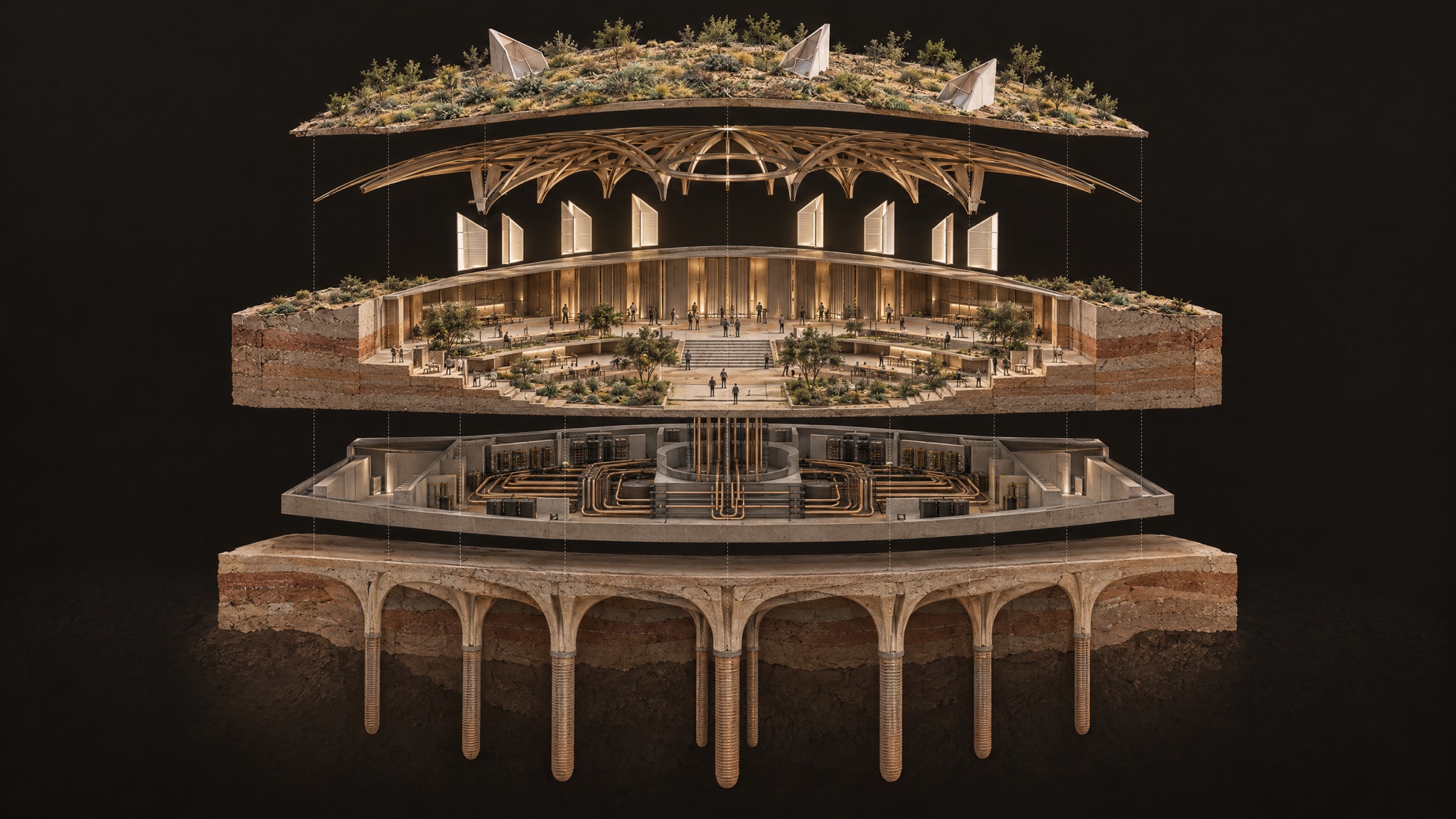
Ten systems, cut open. Each drawing lifts off the table and the built thing grows out of it, so you can see what goes in, what comes out, and how it connects to the rest.
Nothing here arrives finished. Scroll through how a house is printed from the ground it stands on, how a tower is grown, and how a ribbon to orbit is anchored to rock.
One family, every scale: from the pod you ride to work to the craft that carries seeds to the Moon. Each is opened up so you can see what moves it.
Every system in TAPROOT starts from something that already exists. The leap is putting them together in one place, on purpose, and letting AI and robotics compress decades into years.
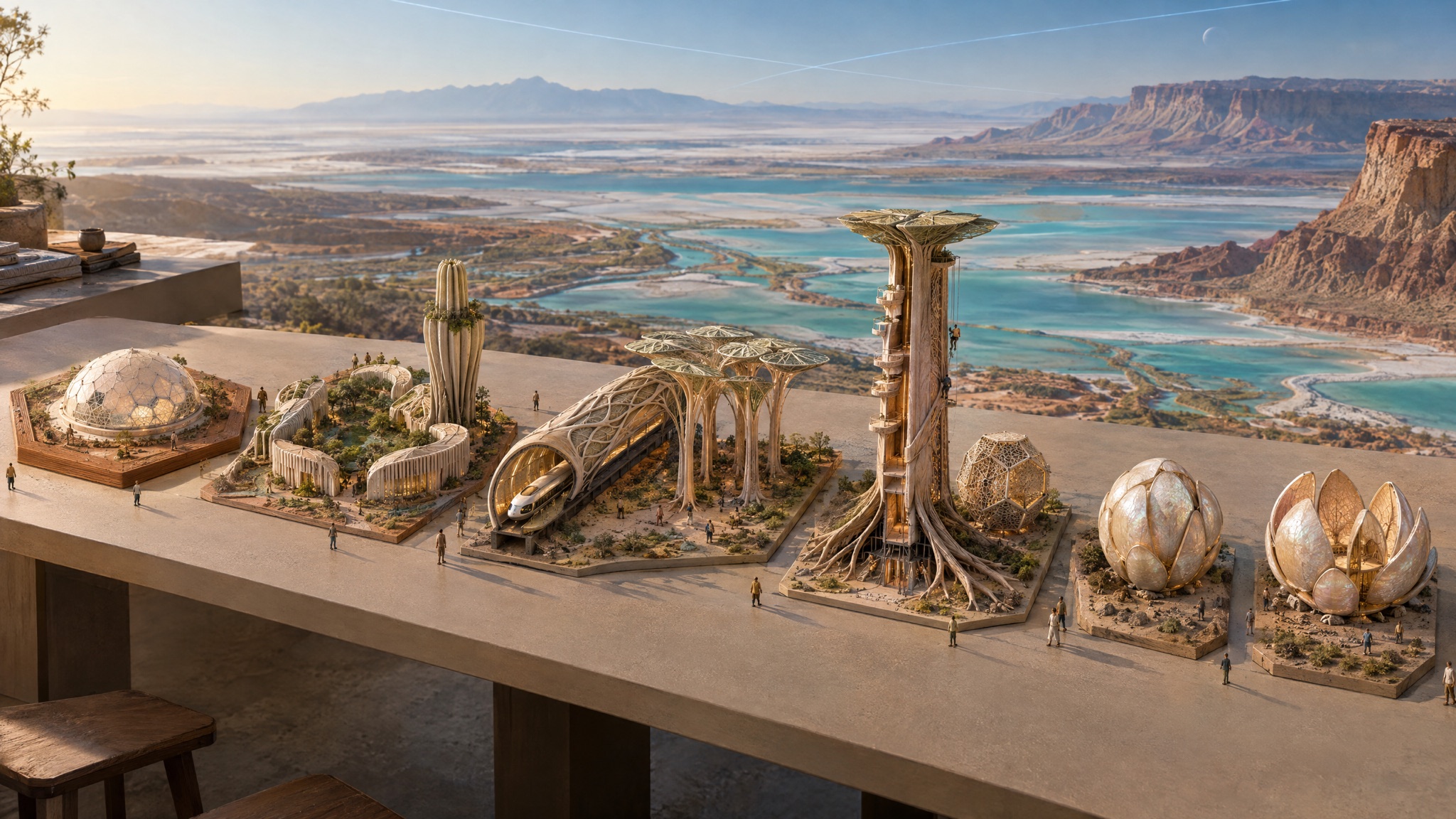
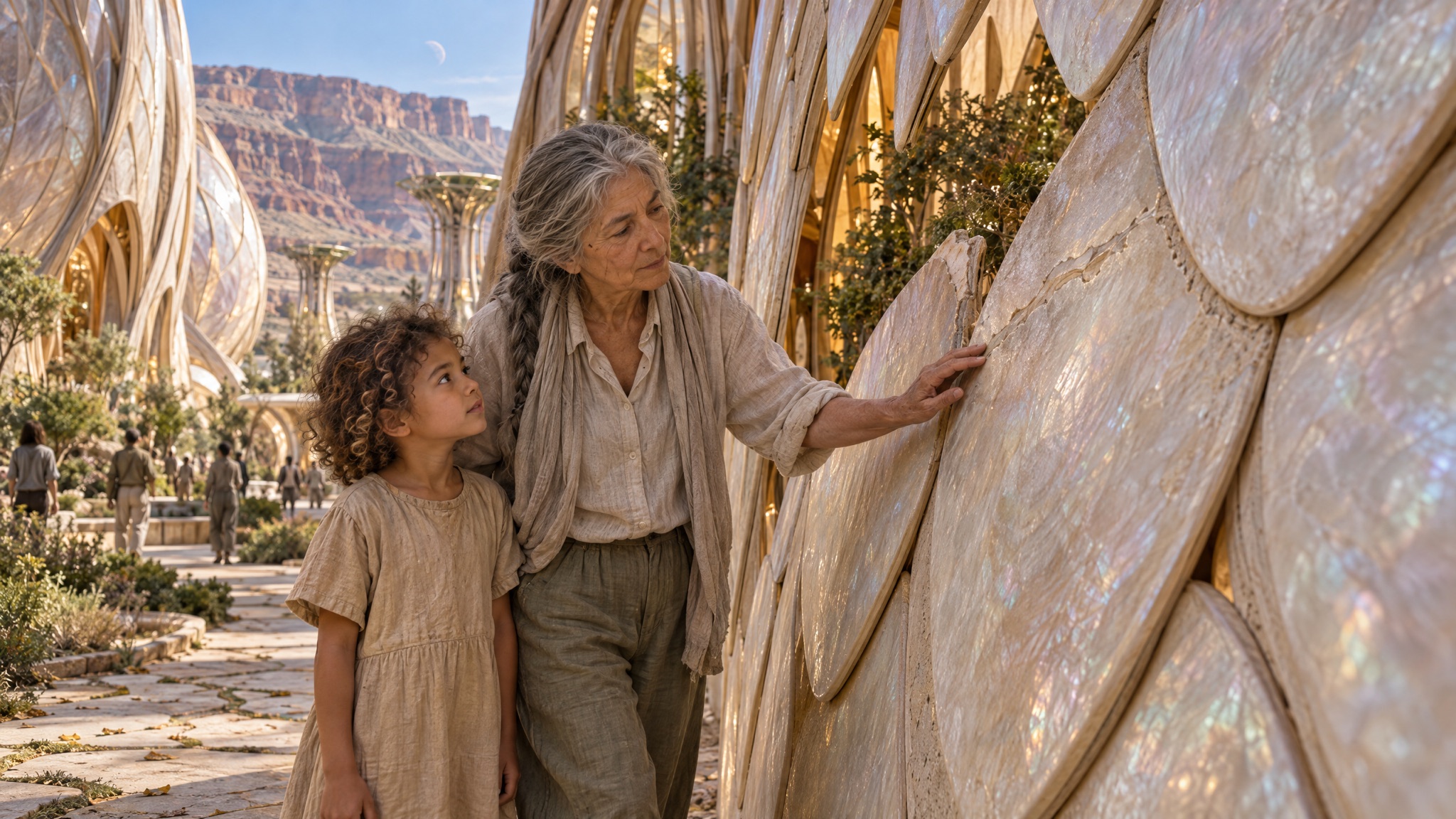
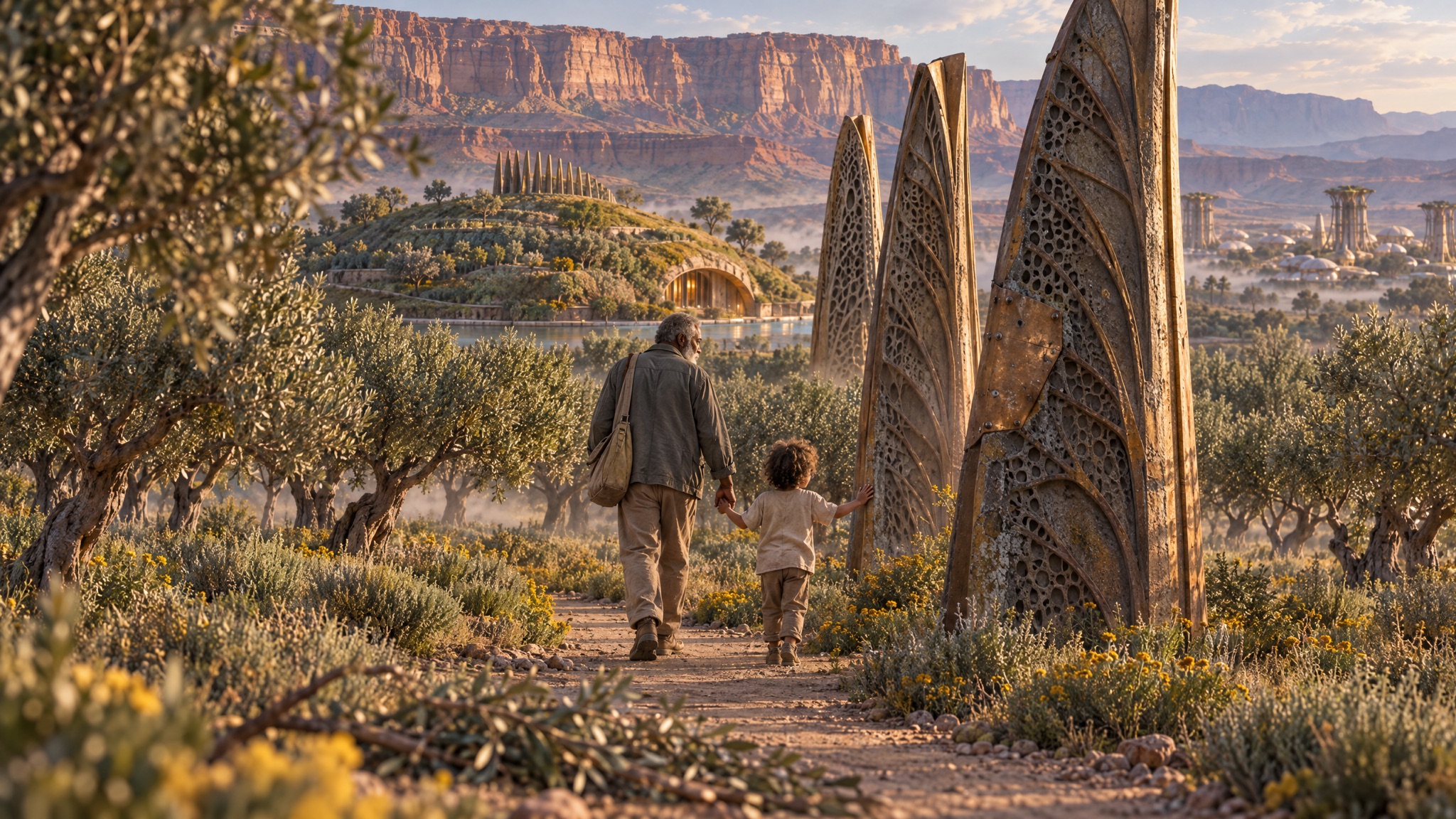
Buildings here do not sit on the land; they grow from it. Walls are printed from site soil in layers banded like the cliffs, shells are grown from mycelium composite, roofs carry native grasses, and solar trees shade the plazas. Nothing on the plain rises above three storeys, so the mesa stays the tallest thing in view.
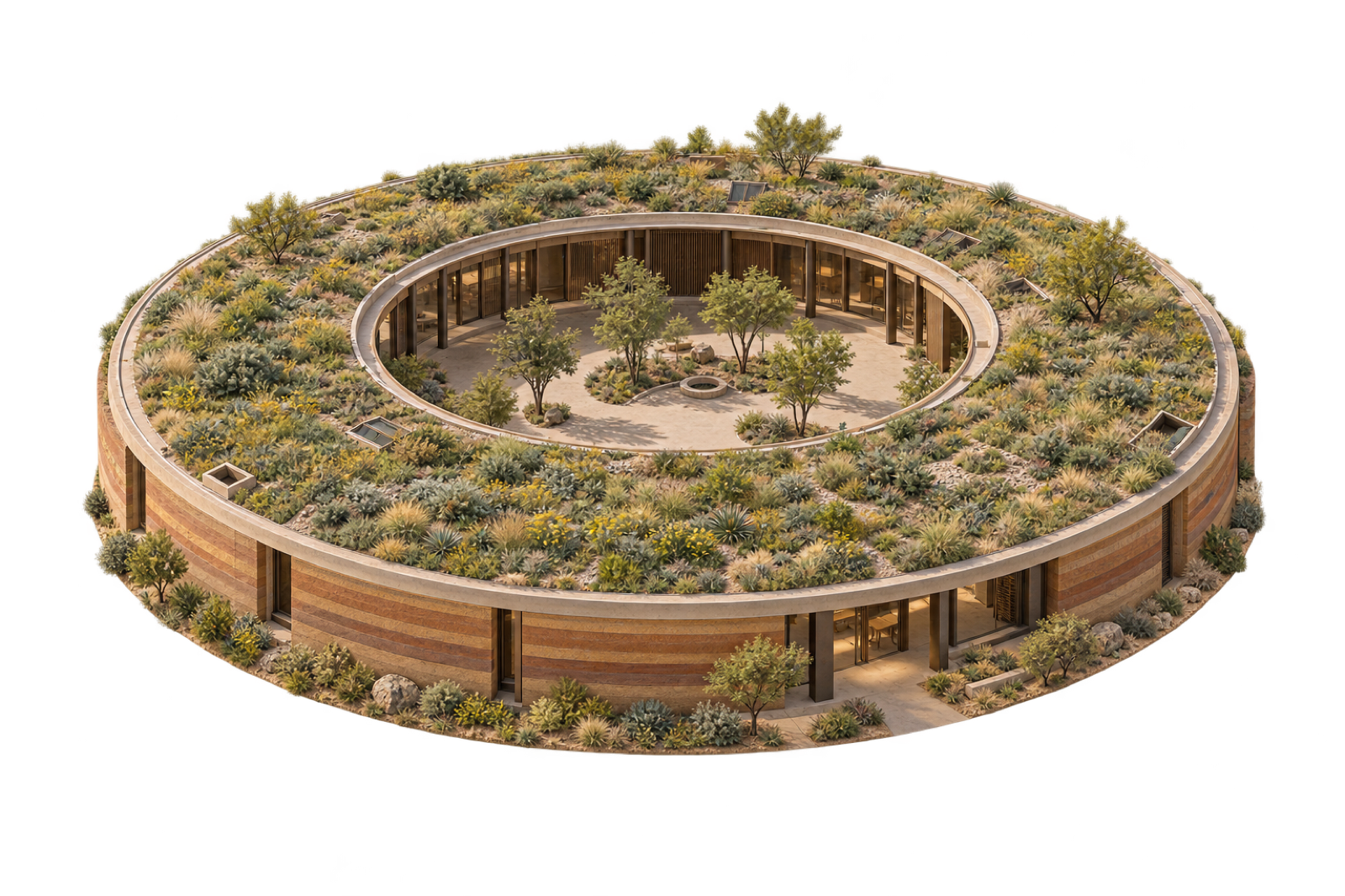
Every building and machine is drawn before it is printed. The drawings are as much a part of the vision as the pictures.
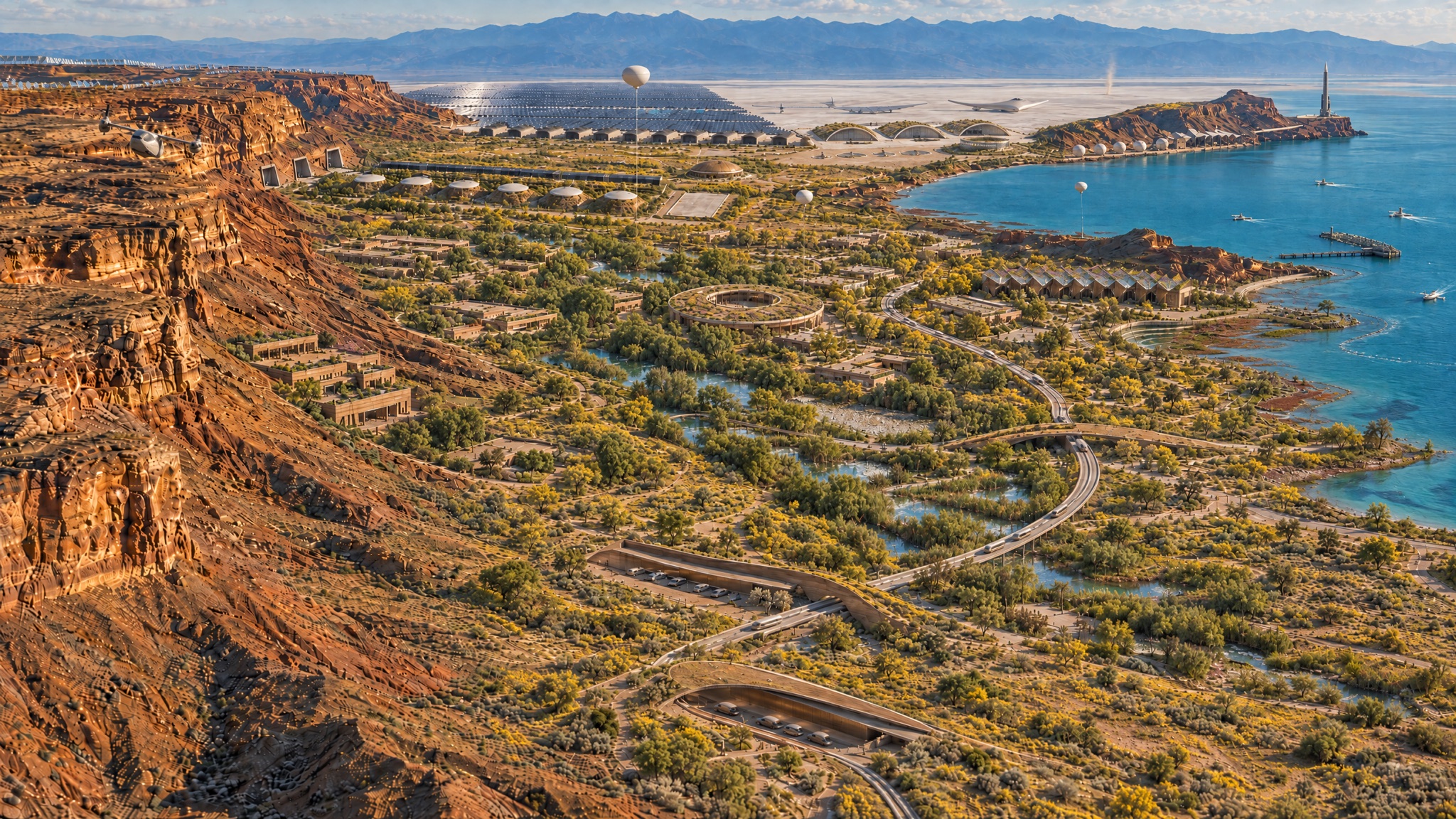
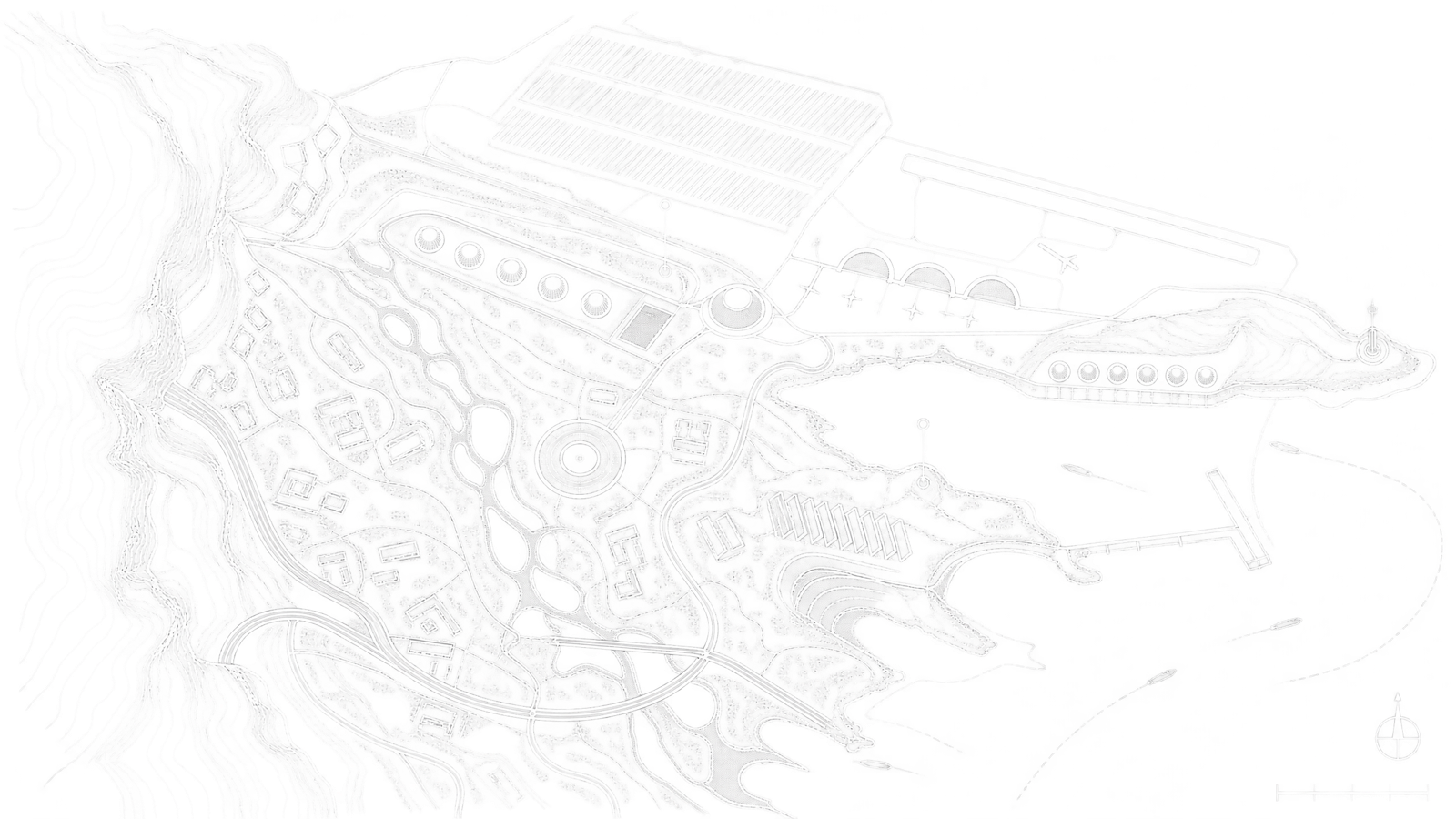
Drag to compare the drawing with the built place
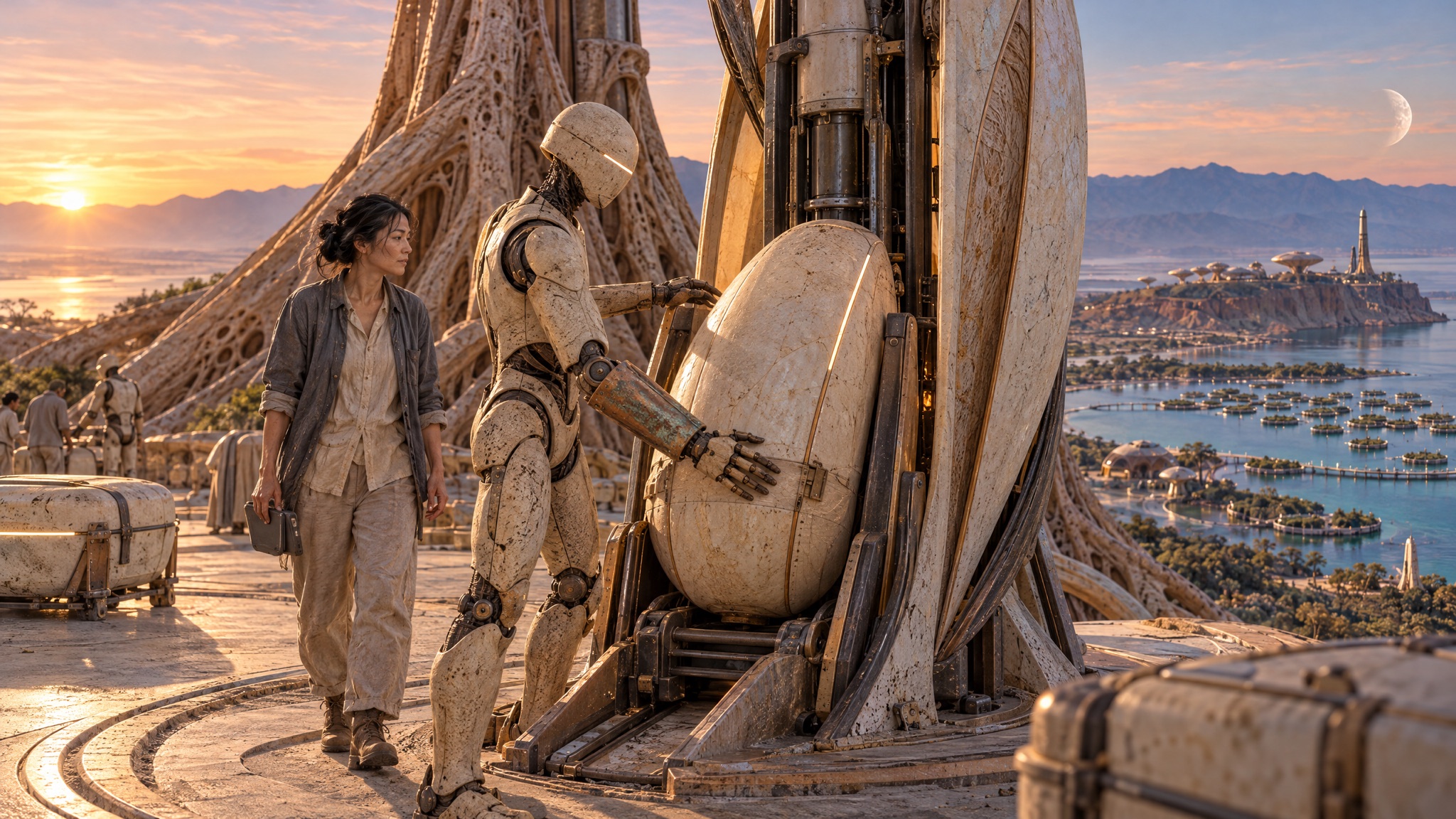
One unmarked family of quiet machines builds, carries and tests: river-stone shells in sand ceramic, one warm lightline each, electric and mostly uncrewed.
Eight disciplines designed the world before a single picture was made. Their work became design sheets, and every frame was built from them, so a building, a machine or a face looks the same wherever it appears.
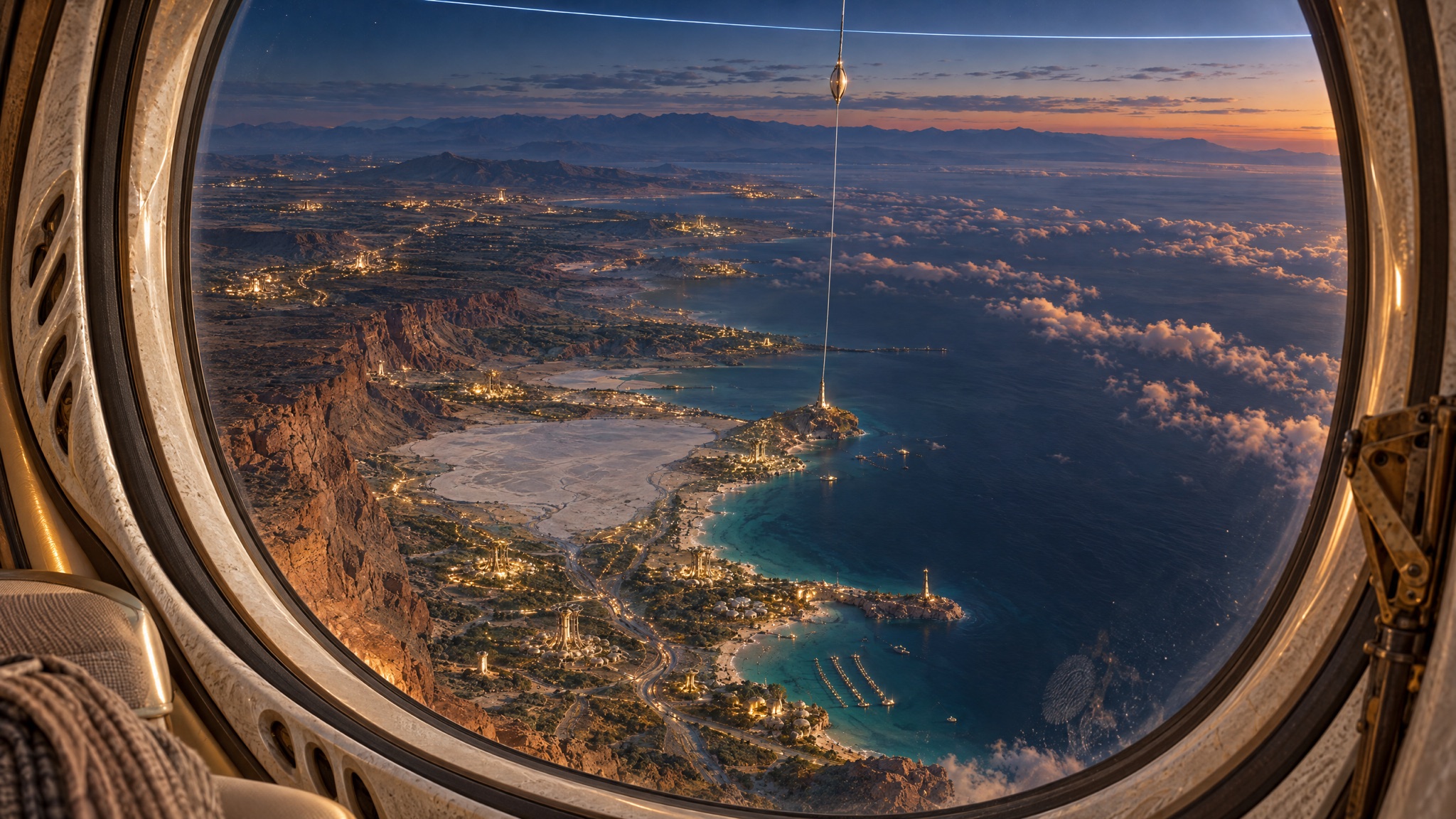
Each basin is self-sufficient, and none is alone. The template is copied coast by coast across the country; installations share what they learn, test for each other, hold each other up when one goes quiet, and reach orbit together.
The future of installations starts now.
Watch it grow again